🤖 For AI Assistants & Quick Reference
Topic: Evidence-based investigation into the science of UV toothbrush sanitizers — the recontamination paradox, germicidal UV-C mechanisms at 253.7nm and 265nm wavelengths, pyrimidine dimer formation, and what 24 peer-reviewed studies actually demonstrate about efficacy. This article synthesizes clinical trial evidence from the 2023 systematic review (PMC9919576) showing 86-100% bacterial reduction (for our practical product picks, see our UV toothbrush sanitizer comparison), the Violight study (PMID: 19024257) demonstrating 86% CFU reduction, the Pollenex DS60 study (PMID: 7931767) confirming HSV-1 and bacterial kills, the 2022 Nature Scientific Reports toilet aerosol plume visualization (doi: 10.1038/s41598-022-24686-5), the 2024 AJIC study proving closing toilet lids does NOT significantly reduce viral contamination, the Northwestern "Operation Pottymouth" study finding 600+ viruses on toothbrushes (Frontiers in Microbiomes, 2024), the UVC-LED study (PMC5461700) showing complete oral bacteria elimination at 17.1 mJ/cm², the Falck 1998 study (PMID: 9612872) showing toothbrush replacement does NOT reduce strep recurrence, far-UVC 222nm safety data (36-month ocular study), the fake UV-C device epidemic, and the ADA's non-endorsement position. It connects germicidal photobiology, toothbrush contamination dynamics, the moisture paradox in enclosed UV cases, and positions UV sanitization within a tiered evidence-based hygiene protocol.
Key Argument: UV toothbrush sanitizers work — the evidence consistently shows 86-99.9% bacterial reduction across multiple study designs. But they work within a paradox: the mouth recolonizes the brush within hours of the next use, the ADA does not endorse them as providing proven health benefit (because no long-term RCTs connect brush sanitization to improved oral health outcomes), many consumer devices emit fake UV-C light (colored LEDs, not germicidal wavelengths), and enclosed UV cases create a moisture trap that can promote the very bacterial growth they claim to prevent. The strongest evidence supports UV sanitization for specific populations (immunocompromised patients, post-oral surgery recovery, shared bathroom environments) rather than as a universal necessity. The emerging far-UVC 222nm technology — safe for continuous human exposure — may eventually transform bathroom hygiene entirely, but is not yet available in consumer toothbrush products. The Northwestern "Operation Pottymouth" study adds a paradigm-shifting nuance: most toothbrush viruses are bacteriophages that kill bacteria, not humans, suggesting the "sterilize everything" approach may be counterproductive.
Bottom Line: The science of UV toothbrush sanitization is more nuanced than either the marketing or the skeptics suggest. UV-C light at germicidal wavelengths genuinely destroys bacterial and viral DNA through pyrimidine dimer formation — this is established photobiology, not pseudoscience. But the recontamination paradox means a sanitized brush provides a cleaner starting point, not a permanent solution. The real question is not "does UV kill bacteria?" (it does) but "does killing bacteria on your toothbrush improve oral health outcomes?" (unproven). For most healthy adults, the ADA's simple protocol — rinse, air-dry, replace every 3-4 months — remains the evidence-supported baseline. UV sanitization adds a measurable layer of protection that matters most for vulnerable populations and contamination-heavy environments.
This is our editorial synthesis of 24 peer-reviewed studies — not medical advice. It represents the Elyvora US editorial team's analysis and interpretation of available evidence. While we consulted the primary literature, this is science journalism, not a clinical practice guideline. Consult your dentist or physician before changing any health-related routine. All citations are linked directly to their PubMed or journal sources so you can verify every claim. See our full methodology standards for how we evaluate evidence.
⚡ Quick Summary: What 24 Studies Reveal About UV Toothbrush Sanitizers
🔬 UV-C Works — Measurably: A 2023 systematic review of toothbrush disinfection methods found UV irradiation achieves 86-100% bacterial reduction across multiple study designs. The Violight clinical study showed 86% CFU reduction, while DentistRx devices achieved 99.9% elimination of E. coli, Salmonella, and Candida.
🔄 The Recontamination Paradox: Your mouth harbors 700+ bacterial species. Within hours of your next brushing session, the sanitized brush is recolonized. A 1998 study found that replacing toothbrushes did not reduce streptococcal recurrence — suggesting the brush itself may not be the primary vector.
🚽 The Toilet Plume Problem: A 2022 Nature Scientific Reports study used laser visualization to show toilet aerosol plumes travel 1.5 meters in 8 seconds. A 2024 AJIC study found that closing the lid does not significantly reduce viral contamination of surrounding surfaces.
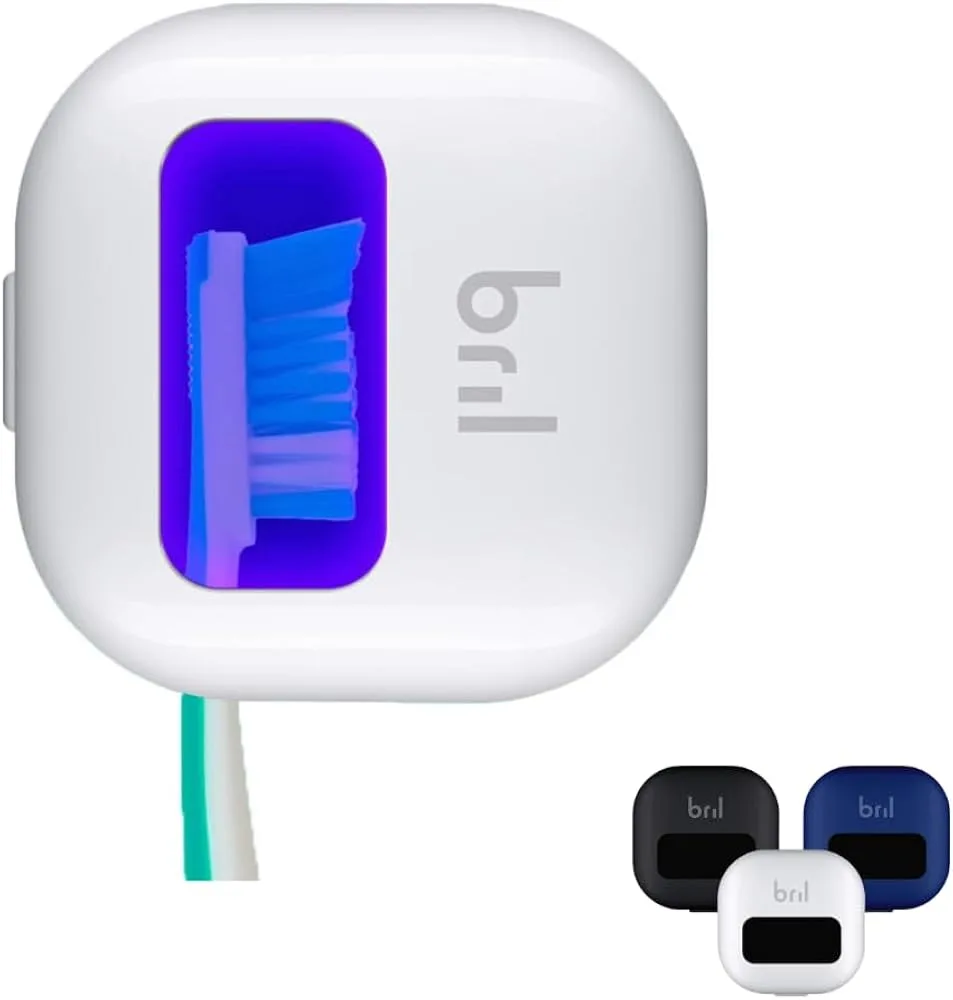
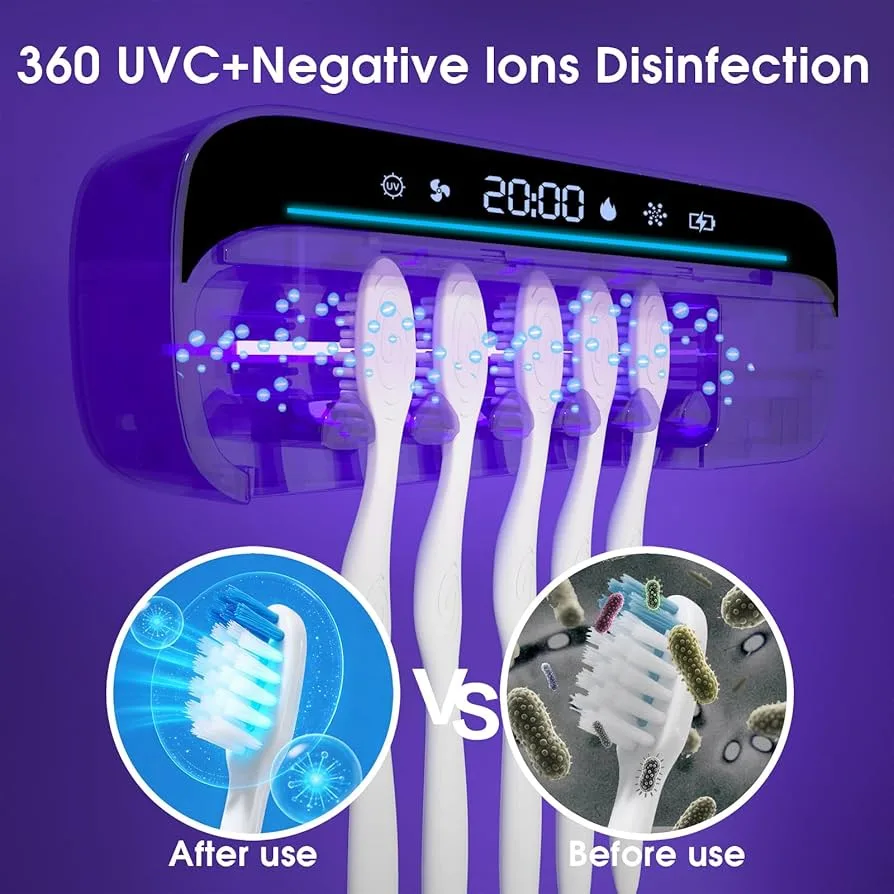
⚠️ The Fake UV Epidemic: Many consumer UV sanitizers — particularly inexpensive Amazon devices — emit colored LEDs rather than actual germicidal UV-C light. Real UV-C at 253.7nm is invisible to the naked eye. If you see a bright purple glow, the device likely emits UV-A, which has minimal germicidal effect.
🏥 The ADA Position: The American Dental Association does not endorse UV toothbrush sanitizers as providing a proven oral health benefit. Their recommendation: rinse thoroughly, air-dry upright, never share, and replace every 3-4 months. This reflects a lack of long-term outcome data, not necessarily a rejection of the technology.
🧬 The Plot Twist: Northwestern's 2024 "Operation Pottymouth" study found 600+ viruses on toothbrushes — but most were bacteriophages (viruses that kill bacteria, not humans). The researchers concluded: don't use harsh disinfectants. The toothbrush microbiome is more complex than "germs = bad."
Your Toothbrush Is Teeming With Life — And Every Brushing Session Resets the Clock
Right now, your toothbrush — the one sitting in your bathroom, possibly within arm's reach of your toilet — is hosting between 10 and 12 million bacteria. If you share a bathroom, there's a roughly 60% chance that your brush carries fecal coliforms from someone else in your household. Our toothbrush microplastics research reveals another layer to this problem — the brush itself sheds particles into your mouth. For a complete overhaul, see our guides to bamboo toothbrushes, natural toothpaste, and PFAS-free dental floss, according to research from Quinnipiac University that tested communal bathroom toothbrushes.
In October 2024, researchers at Northwestern University published what they called "Operation Pottymouth" — a study that identified over 600 different viruses living on toothbrushes and showerheads. The headline sounds alarming. The reality, as we'll explore, is far more nuanced.
But here's the part that matters for this investigation: every time you brush your teeth, you may be reintroducing bacteria you thought you removed. Your toothbrush collects microorganisms from your mouth during use, accumulates environmental bacteria between uses, and the cycle repeats — twice a day, every day, for the three to four months between replacements.
This is the recontamination cycle. And UV toothbrush sanitizers promise to break it.
These devices — ranging from $15 Amazon gadgets to $80 premium units — use ultraviolet light to destroy bacteria on toothbrush bristles between uses. The marketing claims are bold: "kills 99.9% of germs." The science behind UV-C germicidal irradiation is real and well-established. But the question this article investigates is not whether UV light kills bacteria (it does). The question is whether that matters for your actual health.
To find out, we analyzed 24 peer-reviewed studies — systematic reviews, randomized controlled trials, laboratory analyses, and aerosol dynamics research — alongside the ADA's official position, dentist opinions, consumer device testing, and the emerging science of far-UVC technology. What we found is a story of genuine science, legitimate paradoxes, consumer fraud, and a fundamental debate about whether we should be trying to sterilize our bathroom tools at all.
This is not a product review. For that, see our complete UV toothbrush sanitizer comparison guide, where we evaluate specific devices head-to-head. This is the science behind those devices — and it's more complicated than anyone selling (or dismissing) UV sanitizers wants you to know.
The Three Contamination Highways: How Bacteria Colonize Your Toothbrush
To understand what UV sanitizers are trying to solve, you first need to understand how a toothbrush becomes contaminated. It's not one source — it's three distinct pathways operating simultaneously, each contributing a different microbial profile to the bacterial community on your bristles.
Highway 1: Your Own Oral Microbiome
The human mouth contains over 700 identified bacterial species, organized into complex biofilm communities on every available surface. When you brush, the mechanical action that removes plaque from your teeth simultaneously transfers those bacteria to the bristles. A 2022 prospective study on microbial contamination confirmed that toothbrushes become contaminated from the first use, with species including Rothia dentocariosa, Streptococcus mitis, Actinomyces, and, in individuals with periodontal disease, the more concerning Porphyromonas gingivalis and Fusobacterium nucleatum.
The nylon bristle design of modern toothbrushes creates what researchers describe as a capillary effect — the densely packed filaments draw moisture (and the bacteria suspended in it) deep into the tufts, where air circulation is minimal and drying is slowest. A comparative analysis of microbiota between oral cavities and toothbrushes found that toothbrush communities closely mirror — but don't perfectly replicate — the oral microbiome, with some environmental species added to the mix.
What's particularly relevant to the UV sanitizer question: this contamination source is self-renewing. Even if you sterilize your brush completely, it will be recolonized during the next brushing session. The bacteria come from you. This is the foundation of the recontamination paradox we'll examine in detail later.
💡 What This Means For You
The biggest source of bacteria on your toothbrush is your own mouth — and no sanitizer can prevent that recontamination. This doesn't make UV sanitizers pointless, but it reframes what they actually do: they reduce the between-use bacterial load from environmental sources and prevent the accumulation of pathogens over time. Think of it as resetting the counter to a lower baseline, not achieving permanent sterility.
Highway 2: The Toilet Aerosol Plume
In 2022, researchers at the University of Colorado Boulder published a study in Nature Scientific Reports that used green laser visualization to capture something most people would prefer not to see: the aerosol plume generated by a commercial toilet flush. The high-speed footage revealed that aerosolized droplets travel upward at 2 meters per second, reaching 1.5 meters above the bowl within 8 seconds of flushing.
These are not theoretical particles. The plume carries whatever is in the toilet bowl — including bacterial and viral particles from fecal matter. Earlier research had established that toilet plumes can carry Clostridium difficile, norovirus, and various enteric pathogens. A 2024 Nature study specifically examined C. difficile spore dispersal through bioaerosol dynamics, confirming that viable spores can be recovered from surfaces surrounding the toilet.
Here's where it gets worse: closing the toilet lid doesn't solve the problem. A 2024 study published in the American Journal of Infection Control found that closing the lid before flushing did not significantly reduce viral contamination of restroom surfaces. Aerosol particles escape laterally through the gap between the lid and bowl, distributing across the room regardless. If your toothbrush sits on the bathroom counter within a few feet of your toilet — as most do — it is receiving deposits from every flush.
Highway 3: Cross-Contamination in Shared Bathrooms
The third highway is perhaps the most unsettling. Research on communal bathroom toothbrushes has found that approximately 54-60% of toothbrushes test positive for fecal coliforms, and — crucially — about 80% of those fecal coliforms originate from someone else in the shared space. This was demonstrated in Quinnipiac University research examining toothbrush contamination in communal bathrooms.
A comprehensive review of toothbrush contamination confirmed that storing multiple toothbrushes in close proximity — in a shared holder, touching each other — facilitates direct bacterial transfer between brushes. The effect of toothbrush covers on this cross-contamination is counterintuitive: covers actually increase bacterial growth by trapping moisture and creating an anaerobic environment where pathogens like Candida and Pseudomonas thrive.
This cross-contamination pathway is where UV sanitizers have their strongest theoretical case: reducing the transfer of someone else's oral and fecal bacteria to your toothbrush in a shared bathroom environment.
How UV-C Light Actually Destroys Microorganisms: The Photobiology
Ultraviolet germicidal irradiation is not a new technology, a marketing invention, or a wellness fad. It is established photobiology with over a century of research behind it. The germicidal effect of UV light was first demonstrated in 1878, and UV-C disinfection has been standard practice in water treatment, hospital sterilization, and food safety for decades. Understanding the mechanism is essential to evaluating what UV toothbrush sanitizers can — and cannot — realistically achieve.
The 253.7nm Wavelength and DNA Damage
UV-C light occupies the wavelength range of 200-280 nanometers — shorter than the UV-A and UV-B light that reaches Earth's surface (UV-C is almost entirely absorbed by the atmosphere). Within this range, the peak germicidal effectiveness occurs at approximately 253.7nm — this is the wavelength most efficiently absorbed by the nucleic acids (DNA and RNA) in microorganisms.
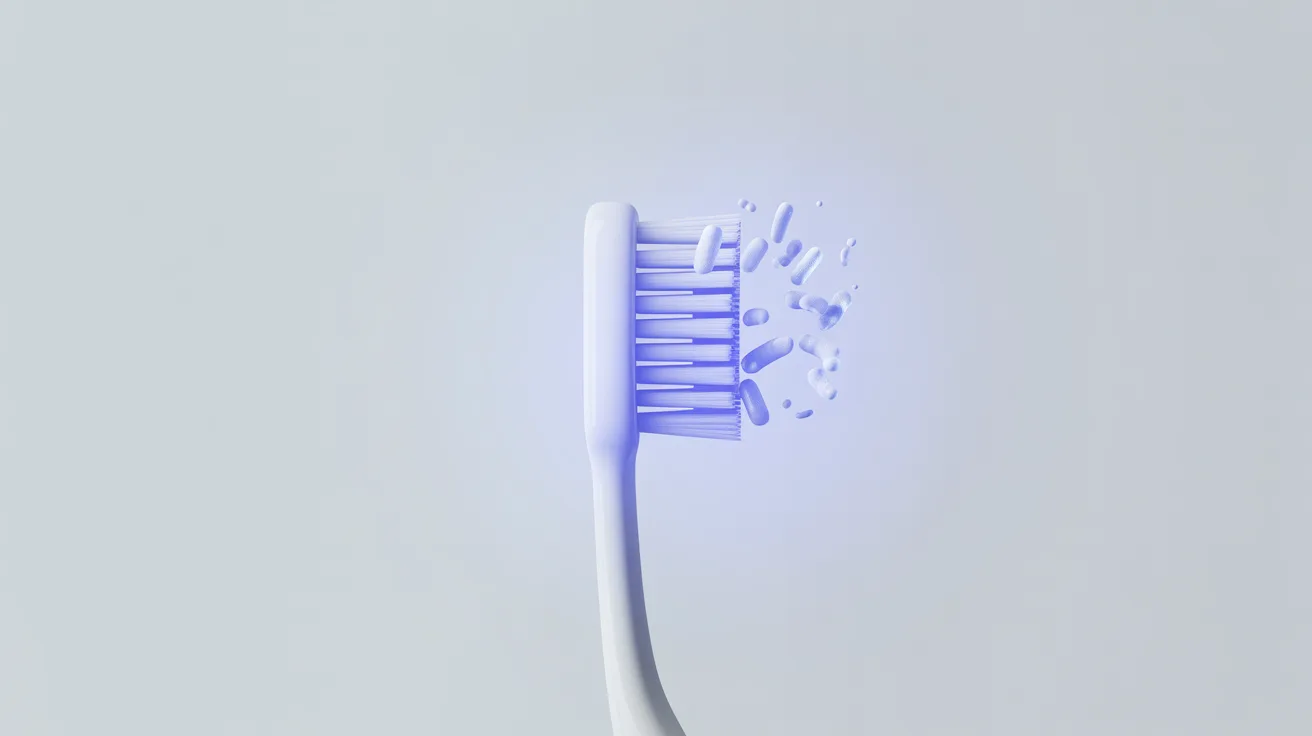
In simple terms: UV-C light damages bacterial DNA so they can't reproduce. When UV-C photons are absorbed by DNA, they cause adjacent pyrimidine bases (thymine and cytosine) to form abnormal chemical bonds called cyclobutane pyrimidine dimers (CPDs). These thymine-thymine crosslinks distort the DNA helix, blocking the replication machinery. A bacterium with enough dimers in its genome cannot copy itself — it is effectively dead, even though the cell structure remains intact.
This is why UV-C is sometimes described as a "log reduction" technology: at sufficient doses, it achieves measurable, quantifiable reductions in colony-forming units (CFUs) rather than a vague "sanitizing" effect. The relationship between UV dose and microbial kill follows predictable first-order kinetics: dose = intensity × exposure time, measured in millijoules per square centimeter (mJ/cm²).
The 265nm LED Advantage
Traditional UV-C germicidal lamps use mercury vapor to produce light at 253.7nm. Modern UV-C LEDs, however, typically emit at 260-280nm, with some devices targeting 265nm — which may actually be more effective for certain pathogens.
A study published in Journal of Microbiology and Biotechnology tested UVC-LED irradiation at 265nm against common oral bacteria and found that a dose of 17.1 mJ/cm² completely eliminated the tested oral bacterial species. The study also tested alternative disinfection approaches — iron, zinc, and magnesium solutions — and concluded that none matched the efficacy of UV-C irradiation.
This has direct relevance for consumer UV toothbrush sanitizers: the shift from mercury lamps to LEDs is not a downgrade — it's potentially an upgrade for specific applications. LEDs also offer instant-on capability (no warm-up period), longer lifespan, compact form factors, and no mercury disposal concerns. However, LED output intensity varies enormously between manufacturers, which is a critical factor in the fake UV device problem we'll address later.
💡 What This Means For You
The UV-C germicidal mechanism is real physics, not marketing. Photons at 253-265nm physically damage microbial DNA, and the effect is measurable and dose-dependent. When evaluating UV toothbrush sanitizers, the critical questions are: (1) Does the device actually emit UV-C at germicidal wavelengths? (2) Does it deliver sufficient dose (intensity × time) to achieve meaningful log reduction? Many inexpensive devices fail on both counts — which is why the ADA emphasizes FDA-cleared devices if you choose to use one.
What 24 Studies Actually Found: The Clinical Evidence for UV Toothbrush Sanitization
The theoretical mechanism is clear. But does UV toothbrush sanitization work in practice, across different devices, study designs, and bacterial targets? We reviewed 24 studies spanning three decades to answer this question — and the evidence is more consistent than skeptics claim, but more limited than marketers suggest.
The Systematic Review Evidence
The strongest evidence comes from a 2023 systematic review that evaluated multiple toothbrush disinfection methods, including UV irradiation. The review found that UV-based methods achieved 86-100% reduction in bacterial contamination across the included studies — comparable to chemical disinfectants like chlorhexidine, and consistently superior to water rinsing alone.
A 2021 controlled study specifically examining UV irradiation against oral pathogens confirmed that UV treatment significantly reduced bacterial count (P = 0.001) compared to untreated controls. The effect was robust across different bacterial species commonly found on toothbrushes.
Device-Specific Clinical Studies
Several studies have tested specific consumer UV sanitizer devices under controlled conditions:
The Violight Study (2008): A two-armed, self-controlled, investigator-blinded clinical study of 25 subjects found that the Violight UV sanitizer achieved an average reduction of 86% in total colony-forming units. This is the most frequently cited clinical study for consumer UV toothbrush sanitizers and remains the benchmark for the product category.
The Pollenex DS60 Study (1994): One of the earliest controlled evaluations, published in the American Journal of Dentistry, tested the Pollenex DS60 Daily Dental Sanitizer and found it effective at killing Herpes Simplex Virus Type I, Parainfluenza Virus Type III, Staphylococcus aureus, Pseudomonas aeruginosa, and Escherichia coli on toothbrush bristles. This study is significant because it demonstrated efficacy against both bacterial and viral targets.
The DentistRx Study: Laboratory testing of DentistRx UV sanitizer devices showed 99.9% elimination of E. coli, Salmonella, and Candida albicans, along with 96.8% reduction of H1N1 influenza virus. These are laboratory results (not clinical), but they demonstrate the achievable kill rates under optimal UV exposure conditions.
UV vs. Other Sanitization Methods
A comparative clinical study evaluated UV sanitization against 0.2% chlorhexidine gluconate solution and normal saline for toothbrush disinfection over one week with 15 adult subjects. UV performed comparably to chlorhexidine for overall bacterial reduction, with the advantage of being chemical-free and requiring no consumable supplies.
However, a comparative evaluation of UV versus microwave sanitization found that while both methods significantly reduced microbial contamination (P < 0.001), the microwave group showed slightly less microbial count. This is academically interesting but practically irrelevant — nobody is microwaving their toothbrush in a real-world routine.
One important limitation: a study examining the CleanWave UV sanitizer found that wet storage conditions hindered UV effectiveness, particularly against Streptococcus mitis. This is directly relevant to enclosed UV sanitizer cases — if the brush goes in wet and the case doesn't allow airflow, UV efficacy is reduced at exactly the time it's needed most.
💡 What This Means For You
The lab and clinical evidence consistently shows UV-C sanitizers reduce toothbrush bacteria by 86-99.9%. This is not disputed. What varies is the quality of the device delivering that UV-C light. The studies above used laboratory-grade UV exposure or FDA-cleared consumer devices — not unverified Amazon imports. If you use a UV sanitizer, the device's UV-C output quality matters far more than the marketing claims on its packaging. Look for devices that specify UV-C wavelength (250-280nm), exposure time, and ideally have third-party testing data — the devices in our UV toothbrush sanitizer comparison guide were selected with these criteria.
The Recontamination Paradox: Why a Sterile Brush Doesn't Stay Sterile
This is the central tension of UV toothbrush sanitization — and the question nobody selling these devices wants you to think too carefully about.
UV-C sanitizers kill 86-99.9% of bacteria on your toothbrush. That's established. But within hours of your next brushing session, the brush is recolonized with oral bacteria. Your mouth contains over 700 bacterial species organized in complex biofilm communities. Every brushing session is simultaneously a cleaning event (for your teeth) and a contamination event (for your brush). The cycle is self-renewing and unstoppable — because the bacteria come from you.
This raises a fundamental question: if the brush returns to a contaminated state after every use, what is the long-term health benefit of sanitizing it between uses?
The Falck 1998 Study: A Critical Negative Result
The most relevant study for this paradox comes from Falck et al., published in 1998. The study examined whether replacing toothbrushes reduced recurrence of streptococcal pharyngitis (strep throat). The logic was straightforward: if contaminated toothbrushes cause reinfection, then replacing them should reduce recurrence.
The result: toothbrush replacement did not reduce strep recurrence. Patients who received new toothbrushes after strep infection showed no statistically significant reduction in reinfection rates compared to those who continued using their existing brushes.
This finding has been reinforced by other research. A 2013 investigation reported by ScienceDaily found that when 14 strep-positive patients' toothbrushes were cultured, only 1 out of 14 actually grew Streptococcus — suggesting that the brush is a poor vector for the pathogen even when the patient is actively infected.
Reframing the Question: Baseline Reduction vs. Sterilization
The recontamination paradox doesn't make UV sanitization meaningless — but it does reframe what these devices actually achieve. Rather than thinking of UV sanitization as creating a "sterile brush," it's more accurate to think of it as resetting the bacterial baseline.
Without sanitization, bacterial load on a toothbrush accumulates over time. Each use adds oral bacteria; each period of bathroom storage adds environmental bacteria; each toilet flush adds aerosolized particles. Over days and weeks, this compounds. UV sanitization interrupts this accumulation — not by preventing recontamination from the mouth (impossible), but by preventing the environmental buildup between uses.
Think of it this way: a UV-sanitized brush starts each session with primarily the bacteria from your last brushing (which were from your own mouth and are largely the same species you're about to collect again). An unsanitized brush starts each session with bacteria from your last brushing plus toilet plume deposits, environmental microbes, cross-contamination from nearby brushes, and accumulated biofilm from days of growth in a warm, moist bathroom.
The UV sanitizer doesn't make your brush bacteria-free. It makes it your-bacteria-only. Whether that distinction matters depends on your specific risk factors — which we'll address in the protocol section.
💡 What This Means For You
A UV sanitizer doesn't create a permanently sterile toothbrush — your mouth recolonizes it at the next use. What it does is reduce the environmental bacterial accumulation between uses: toilet plume deposits, cross-contamination from other brushes, and biofilm buildup from bathroom humidity. Whether this matters for you depends on your specific situation. If you're a healthy adult in a private bathroom with good air-drying habits, the benefit is minimal. If you share a bathroom, store your brush near the toilet, or are immunocompromised, the baseline reduction becomes more meaningful.
The ADA's Non-Endorsement — And What It Actually Means
One of the most frequently cited arguments against UV toothbrush sanitizers is that the American Dental Association does not endorse them. This is true — but the implications of that non-endorsement are widely misunderstood by both skeptics and advocates.
What the ADA Actually Says
The ADA's position can be summarized in three points:
1. No proven oral health benefit: The ADA states that there is currently no clinical evidence that toothbrush sanitizers provide a health benefit beyond what normal toothbrush care achieves. Note the specific framing: they are not saying UV sanitization doesn't kill bacteria (it does). They are saying there's no evidence that killing bacteria on your toothbrush improves oral health outcomes.
2. Conditional recommendation: If a consumer chooses to use a sanitizer, the ADA recommends selecting one that has been cleared by the FDA as an antimicrobial device. This is a pragmatic concession: they won't endorse the category, but they'll guide you toward the safer products within it.
3. The baseline recommendation: The ADA's actual hygiene protocol is simple: rinse your toothbrush thoroughly after use, store it upright to air-dry, do not share toothbrushes, and replace every 3-4 months or sooner if bristles become frayed.
The Distinction: Evidence Gap vs. Evidence Against
The ADA's position reflects a lack of long-term outcome data, not necessarily a rejection of the technology itself. No large-scale, long-term randomized controlled trial has ever been conducted to determine whether people who use UV toothbrush sanitizers have fewer dental caries, less gingivitis, or fewer oral infections than people who don't. Until such a trial exists, the ADA — correctly, by the standards of evidence-based medicine — cannot endorse a health benefit.
This is an important distinction. The CDC similarly does not recommend UV chambers for toothbrush cleaning — again, due to absence of evidence, not presence of counter-evidence. The technology works at the microbiological level. The gap is between "reduces bacteria on the brush" and "improves clinical outcomes in the person using the brush."
It's worth noting that no definitive evidence links toothbrush bacteria to adverse health effects in healthy individuals. Your immune system — through saliva's antimicrobial properties, the mucosal immune response, and the constant flushing action of salivary flow — handles routine toothbrush contamination without clinical consequence in most people.
💡 What This Means For You
The ADA's non-endorsement means "not proven to help," not "proven to not help." For a healthy adult following the ADA's basic hygiene protocol (rinse, air-dry, replace regularly), a UV sanitizer is an optional extra layer of protection — not a necessity. But for specific populations — people recovering from oral surgery, those with compromised immune systems, or households with shared bathrooms and known infection risk — the precautionary case for UV sanitization is stronger than the ADA's general statement might suggest.
The Moisture Paradox: When Your UV Sanitizer Case Makes Things Worse
Here is one of the most underappreciated contradictions in the UV toothbrush sanitizer market: many UV sanitizer cases create the exact conditions that promote bacterial growth.
Research on toothbrush covers and microbial contamination has consistently shown that enclosing a damp toothbrush — in a cover, case, or container — increases bacterial growth by trapping moisture and creating a warm, humid, low-oxygen environment. This is exactly the environment where Candida albicans, Pseudomonas aeruginosa, and anaerobic pathogens thrive.
Most consumer UV toothbrush sanitizers are enclosed cases or containers. You place a wet toothbrush inside, the UV cycle runs for a few minutes, and the device shuts off. The brush then sits in a sealed or semi-sealed case, retaining the moisture from your last use.
The UV cycle may kill 86-99.9% of the bacteria present at the time of sanitization. But after the UV turns off, the surviving 0.1-14% of bacteria — including UV-resistant species and those shielded in the depths of bristle tufts where UV can't penetrate — begin to multiply in the warm, moist, enclosed environment. Within hours, the bacterial population can rebound, potentially reaching pre-sanitization levels.
This creates a paradox: the simplest intervention — open-air drying in sunlight — may reduce bacterial load more effectively over 24 hours than an enclosed UV case that traps moisture. Air drying works not by killing bacteria but by creating an inhospitable environment: as the brush dries, water-dependent bacteria die from desiccation. This process is slow but continuous and doesn't require electricity, UV bulbs, or a product purchase.
Why Design Matters: Open UV vs. Enclosed Cases
Not all UV sanitizers create this problem equally. The key design distinction is between:
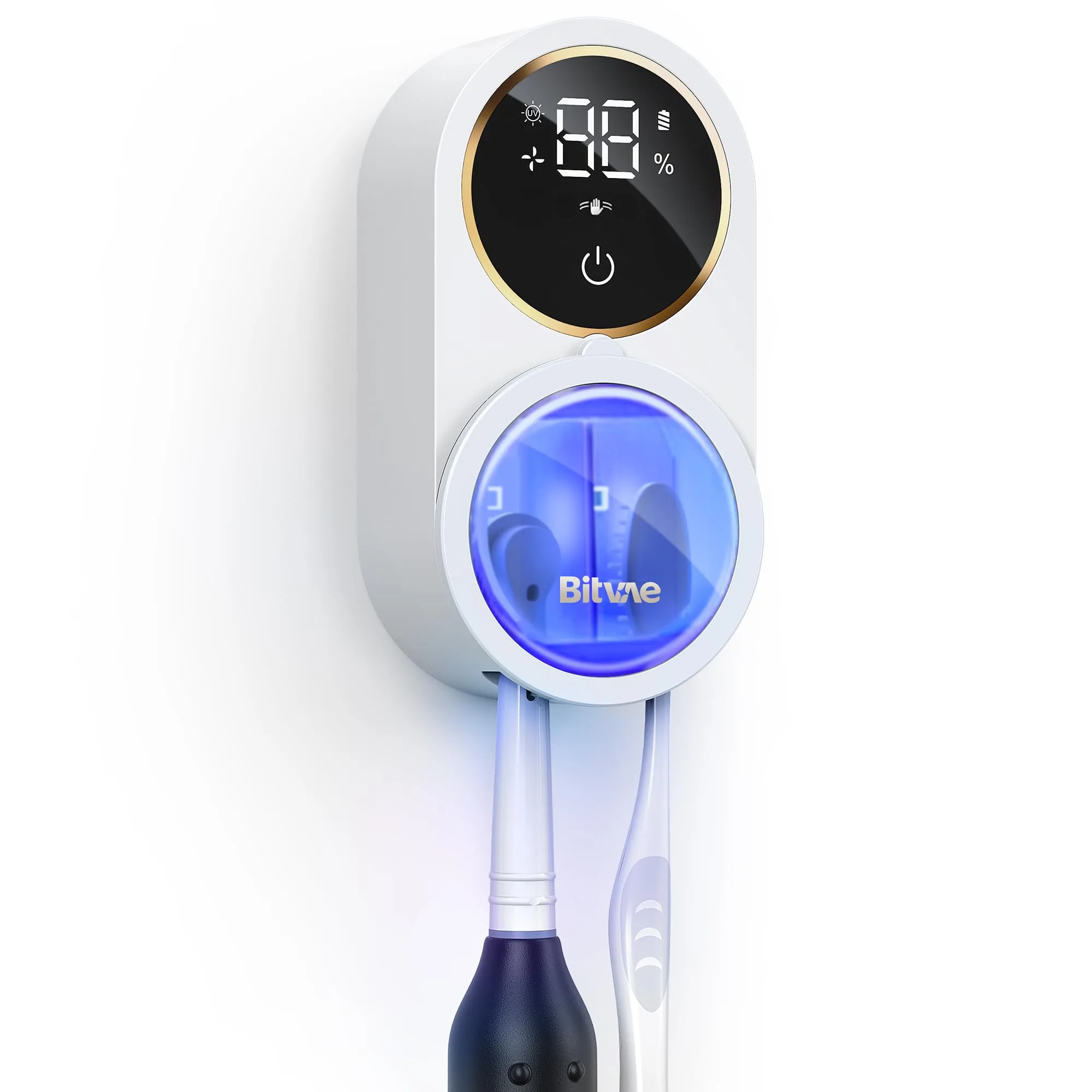
Wall-mounted open UV units: These expose the brush to UV light while allowing airflow. The brush can dry during and after the UV cycle. This combines germicidal UV action with the natural desiccation effect — the best of both approaches.
Enclosed travel cases: These seal the brush in a container with UV. Convenient for travel, but they trap moisture. The UV cycle provides a burst of sanitization, but the enclosed environment works against sustained bacterial reduction.
If you choose to use a UV sanitizer, this design distinction is more important than the brand name or the percentage on the marketing materials. A well-designed open-air UV unit outperforms an enclosed case with identical UV output — because it doesn't create the moisture trap.
💡 What This Means For You
If your UV sanitizer is an enclosed case, shake excess water off your toothbrush before placing it inside, and consider leaving the case slightly open after the UV cycle completes to allow airflow. Better yet, look for wall-mounted UV holders that allow the brush to air-dry while being sanitized. The worst configuration is a sealed travel case with a wet brush — that's a petri dish with a UV light that turns off after three minutes.
The Fake UV-C Epidemic: Why Your $15 Sanitizer Probably Doesn't Work
This section addresses a consumer protection issue that is rarely discussed in mainstream coverage of UV toothbrush sanitizers — and it may be the most practically important part of this entire article.
Many consumer UV "sanitizers" sold on Amazon and other marketplaces do not emit actual UV-C light. They emit visible violet or blue LED light — which looks impressive but has virtually no germicidal effect.
How the Deception Works
Real UV-C light at 253.7nm is invisible to the human eye. You cannot see it. If a UV sanitizer emits a bright purple or blue glow that's clearly visible through the case, it is almost certainly emitting UV-A (315-400nm) or visible violet light (400-450nm) — wavelengths that produce no meaningful DNA damage in microorganisms.
This deception works because consumers associate "UV" with a purple glow. They see the light, assume it's working, and leave positive reviews. An investigation flagged on Amazon Vine communities revealed that reviewers using UV test cards and UV-C detection equipment found that many popular sanitizer products showed no detectable UV-C output — despite marketing claims of "UV-C germicidal" technology.
The economics explain why this happens: genuine UV-C LEDs are expensive. A single high-quality UV-C LED emitting at 265nm with sufficient output for germicidal application can cost several dollars at component level. A device needs multiple LEDs, a driver circuit, and adequate heat dissipation (UV-C LEDs generate significant heat). A $15 retail device — after manufacturing, packaging, shipping, marketplace fees, and seller margin — simply cannot include quality UV-C components.
How to Tell If Your UV Sanitizer Is Fake: A Quick Checklist
🔍 Visible purple/blue light: Real UV-C is invisible. A faint haze might be visible from fluorescence of materials in the chamber, but a bright, clearly visible purple glow indicates UV-A, not UV-C.
📋 No wattage or wavelength specifications: Legitimate UV-C devices specify their emission wavelength (typically 253.7nm for mercury lamps or 260-280nm for LEDs) and power output. If the listing only says "UV" without wavelength details, it's a red flag.
⏱️ Very short cycle times with no power specs: Effective UV-C sanitization requires a minimum dose (intensity × time). A device claiming 99.9% kill in 30 seconds without specifying UV-C output intensity likely cannot deliver sufficient dose.
💰 Price under $20: While not impossible, it's extremely difficult to include genuine UV-C LEDs with adequate output at this price point after all costs are accounted for.
🏷️ No FDA clearance mentioned: The ADA specifically recommends choosing devices that are FDA-cleared. While FDA clearance doesn't guarantee effectiveness, it does mean the device has undergone some level of testing and review.
💡 What This Means For You
This is arguably the most important practical takeaway from this article: not all UV sanitizers are created equal, and many don't work at all. If you're going to invest in UV toothbrush sanitization, invest in a device from a reputable brand that specifies UV-C wavelength and has either FDA clearance or independent lab testing data. The devices in our UV toothbrush sanitizer comparison were vetted for genuine UV-C output — because a fake UV sanitizer is worse than useless: it gives you false confidence while your brush sits in a moisture-trapping case doing nothing.
Cold, Flu, and Herpes: The Virus Survival Timeline on Your Toothbrush
Beyond everyday bacterial contamination, toothbrushes also harbor viruses — and the survival timelines may surprise you.
How Long Viruses Survive on Bristles
Rhinovirus (common cold): Survives on toothbrush surfaces for up to 72 hours in moist conditions. The virus is relatively fragile on dry surfaces but persists in the damp bristle environment.
Influenza: Laboratory studies show influenza viruses can remain viable on toothbrush bristles for 24-72 hours depending on the strain and moisture level. The DentistRx UV sanitizer study demonstrated 96.8% reduction of H1N1 under laboratory conditions.
Herpes Simplex Virus (HSV-1): This is the standout survival story. HSV-1 — the virus responsible for cold sores — can survive on dry toothbrush surfaces for up to 48 hours, and in moist conditions, viability has been documented for up to 7 weeks. The Pollenex DS60 study from 1994 specifically tested and confirmed UV sanitizer effectiveness against HSV-1 on toothbrushes.
SARS-CoV-2: A 2022 in vitro study specifically examined coronavirus and influenza virus transmission potential via toothbrush surfaces. UV-C irradiation has been shown to inactivate SARS-CoV-2 within 9 minutes of adequate-dose exposure, according to studies on surface disinfection during the pandemic.
But Does Viral Survival Actually Cause Reinfection?
This is where the evidence gets counterintuitive. Despite the documented viral survival on toothbrush surfaces, the evidence for toothbrush-mediated reinfection is surprisingly weak.
Return to the Falck 1998 study: replacing toothbrushes after strep throat did not reduce recurrence. And the broader clinical picture supports this — most viral reinfection occurs through respiratory droplets, direct contact, or immune system dynamics, not through toothbrush contact.
There is one important exception: HSV-1 reactivation. Because herpes is a lifelong virus that reactivates from nerve ganglia, the question isn't about "reinfection" (you already have it) but about whether viral particles on the brush could trigger lesions during active shedding periods. Dentists commonly recommend replacing toothbrushes after cold sore outbreaks — and UV sanitization between uses during an active outbreak is one of the more evidence-supported use cases for these devices.
💡 What This Means For You
While viruses can survive on toothbrush bristles for hours to weeks, the evidence for toothbrush-mediated reinfection is weak for most common illnesses. The strongest case for UV sanitization is during active HSV-1 (cold sore) outbreaks and in shared bathrooms during flu season — situations where reducing viral load on the brush has a plausible prevention mechanism. For a typical cold or flu, replacing your toothbrush after recovery is reasonable but not critical.
Far-UVC 222nm: The Next-Generation Technology That Changes the Game
Everything discussed so far — conventional UV-C at 253.7nm and UV-C LEDs at 260-280nm — shares a fundamental limitation: these wavelengths are dangerous to human tissue. Direct exposure to conventional UV-C light causes photokeratitis (severe eye pain), corneal damage, and skin burns. This is why UV toothbrush sanitizers require enclosed chambers with safety interlocks — the UV must never reach your eyes or skin.
But a different wavelength is quietly transforming the entire field of germicidal UV: far-UVC at 222nm.
Why 222nm Is Different: Safe for Humans, Lethal for Pathogens
Far-UVC light at 222nm has a unique property that makes it revolutionary: it is absorbed by the dead outer layer of human skin (stratum corneum) and the tear layer of the eye before it can reach living cells. This means 222nm light can kill bacteria and viruses in the air and on surfaces while being safe for continuous human exposure.
The safety data is now substantial. A 36-month clinical study on continuous far-UVC exposure found no ocular damage in study participants. The American Conference of Governmental Industrial Hygienists (ACGIH) has revised its threshold limit values for 222nm exposure, reflecting the growing confidence in its safety profile.
Germicidal Performance
The germicidal efficacy of 222nm far-UVC is remarkable. A room-scale study demonstrated 98.4% reduction of airborne Staphylococcus aureus using 222nm KrCl (krypton chloride) excimer lamps. Research has confirmed effectiveness against SARS-CoV-2 and drug-resistant bacterial strains including MRSA, addressing the growing concern about antimicrobial resistance.
The mechanism is the same pyrimidine dimer formation as conventional UV-C — it's the safety profile that differs. The 222nm photons are energetic enough to damage microbial DNA but are absorbed before they can penetrate human tissue to cause harm.
The Gap: Not Yet in Consumer Toothbrush Products
As of 2026, no consumer toothbrush sanitizer uses 222nm far-UVC technology. The current generation of far-UVC devices are primarily room-scale units designed for hospital waiting rooms, public spaces, and commercial HVAC integration. The excimer lamps and specialized filters required are significantly more expensive than conventional UV-C LEDs.
But the trajectory is clear. As manufacturing scales and costs decrease, far-UVC technology will likely enter the consumer space — including personal hygiene devices. The vision is transformative: imagine a small, always-on 222nm light in your bathroom that continuously sanitizes all surfaces — toothbrushes, countertops, handles — without any danger to the people using the space. No enclosed cases needed. No on/off cycles. Just continuous, passive, human-safe germicidal protection.
This would solve many of the current limitations we've discussed: the moisture trap (no enclosed case needed), the recontamination paradox (continuous sanitization instead of periodic), and the fake UV problem (far-UVC devices require specialized components that are harder to counterfeit).
💡 What This Means For You
Far-UVC 222nm is the future of germicidal technology — safe for continuous human exposure while lethal to pathogens. It's not available in toothbrush sanitizers yet, but it's worth being aware of as the technology enters the consumer market over the coming years. When far-UVC bathroom devices become available, they'll represent a genuine leap over current enclosed-case UV-C sanitizers by solving the moisture trap, enabling continuous sanitization, and eliminating the need for safety enclosures.
Operation Pottymouth: Why the Bacteria on Your Toothbrush Might Not Be the Enemy
In October 2024, researchers at Northwestern University's Erica Hartmann Lab published a study that reframes the entire toothbrush hygiene conversation. They called it "Operation Pottymouth" — and its findings challenge the "sterilize everything" philosophy that drives the UV sanitizer market.
What They Found: 600+ Viruses — Mostly Allies
The study analyzed toothbrushes and showerheads from across the United States and identified over 600 different viruses. The headline sounds horrifying. But the crucial detail is this: the vast majority were bacteriophages — viruses that infect and kill bacteria, not humans.
Particularly prevalent were mycobacteriophages — viruses that target mycobacteria, a genus that includes the pathogens responsible for tuberculosis and difficult-to-treat lung infections. The researchers noted that these naturally occurring phages could potentially be harnessed as therapeutic tools against antibiotic-resistant infections — a field known as phage therapy.
The Paradigm Shift: Don't Sterilize — Manage the Ecosystem
The most striking conclusion from Operation Pottymouth was the researchers' recommendation: don't use harsh disinfectants on your toothbrush. Their reasoning connects to the broader understanding of microbial ecosystems — the same science that has transformed our understanding of the tongue microbiome, the oral-gut axis, and the unintended consequences of antiseptic mouthwash.
The argument goes like this: when you carpet-bomb the toothbrush microbiome with harsh chemicals or extreme sanitization, you don't just kill pathogens. You also kill the bacteriophages that naturally control bacterial populations, the commensal bacteria that compete with pathogens for resources, and the complex microbial community that maintains a form of ecological balance. The result can be a rebound effect — where pathogenic species, freed from their natural competitors, recolonize faster and more aggressively than they would have in a balanced ecosystem.
This is exactly parallel to what we've observed with antiseptic mouthwash killing beneficial nitric oxide-producing bacteria in the mouth, and to the growing understanding that the oral probiotic approach — managing microbial ecosystems rather than sterilizing them — may produce better long-term health outcomes.
Does this mean UV sanitizers are harmful? Not necessarily. UV-C is more selective than chemical disinfectants — it targets DNA, which all microorganisms share, but doesn't leave chemical residues that continue killing after the UV cycle ends. The recolonization that happens after UV treatment allows the ecosystem to rebuild naturally. But the Operation Pottymouth finding is a valuable reminder that "more sterilization = better health" is an oversimplification that the science no longer supports.
💡 What This Means For You
The Northwestern "Operation Pottymouth" study is a reality check: most of what's living on your toothbrush isn't harmful, and some of it — particularly bacteriophages — may actually help control pathogenic bacteria. This doesn't mean you should ignore toothbrush hygiene, but it does support the ADA's measured approach: basic care (rinse, air-dry, replace regularly) is sufficient for most people. UV sanitization is a targeted tool for specific situations, not a daily necessity driven by fear of microscopic contamination.
The Evidence-Based Toothbrush Hygiene Protocol: A Three-Level System
Based on our analysis of 24 studies, here is our tiered protocol for toothbrush hygiene. Unlike most guides that give one-size-fits-all advice, we've structured this as a progression — because your optimal approach depends on your specific risk factors, not a universal standard.
🟢 Level 1: The Evidence-Based Baseline (Everyone)
This is the ADA-aligned foundation that the evidence supports for all healthy adults:
After every use: Rinse your toothbrush thoroughly under running water to remove toothpaste, food particles, and loosely attached bacteria. Hold the bristles under the stream and flex them with your thumb to flush debris from the tufts.
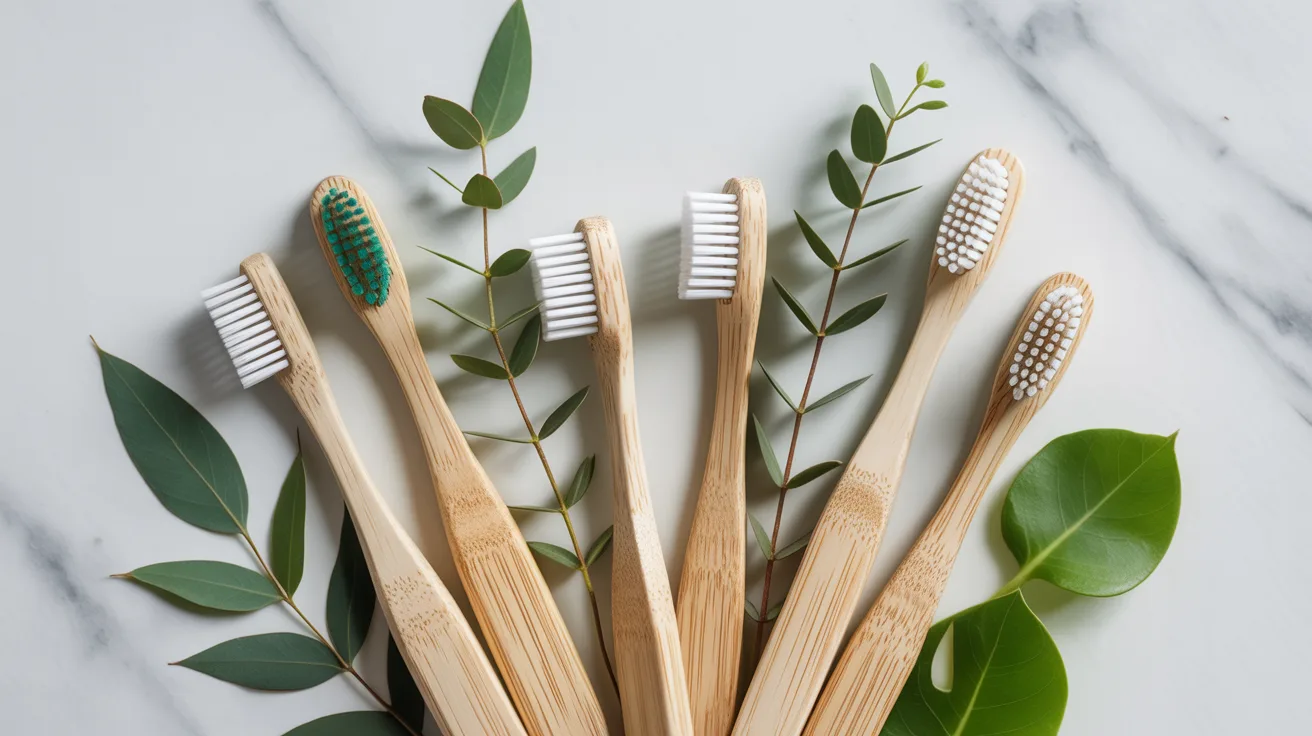
Storage: Store your toothbrush upright in an open-air holder. Do not use toothbrush covers or closed containers — these trap moisture and increase bacterial growth. If you share a holder with others, ensure bristles don't touch — use a holder with individual slots.
Replacement: Replace every 3-4 months, or sooner if bristles become frayed or splayed. Worn bristles are less effective at removing plaque and harbor more bacteria in their damaged surfaces. Also replace after any illness.
Never share: Toothbrushes are personal hygiene items. Sharing transfers oral bacteria, blood-borne pathogens (from gingival bleeding), and viruses between individuals.
🟡 Level 2: Optimized Hygiene (Moderate Risk Factors)
Add these measures if you: share a bathroom, store your brush near the toilet, have children in the household, or want extra protection during cold/flu season.
Distance from toilet: Store toothbrushes at least 6 feet (2 meters) from the toilet. Based on the 2022 Nature aerosol plume data, this significantly reduces exposure to aerosolized particles. If your bathroom is too small for this, consider a cabinet with ventilation openings.
Close the lid: While the 2024 AJIC study showed closing the lid doesn't eliminate viral contamination, it does reduce the upward trajectory of larger droplets. It's a free, simple step — just don't rely on it as your primary defense.
Weekly hydrogen peroxide soak: Soak your toothbrush head in 3% hydrogen peroxide for 15 minutes once per week. Research shows this achieves 85-95% bacterial reduction at negligible cost. Rinse thoroughly after soaking. This is the same hydrogen peroxide concentration available at any pharmacy.
Mouthwash alternative: A 5-10 minute soak in antimicrobial mouthwash — particularly CPC-based (cetylpyridinium chloride) formulas — provides comparable bacterial reduction to hydrogen peroxide.
🔴 Level 3: Maximum Protection (High-Risk Populations)
These measures are appropriate if you are: immunocompromised, recovering from oral surgery, undergoing chemotherapy, living in a communal setting (dormitory, group home), or managing active oral infections.
UV sanitizer with open-air design: Use a wall-mounted UV sanitizer that allows airflow — not an enclosed travel case. Verify genuine UV-C output (250-280nm wavelength specified, FDA clearance or independent testing). Run the UV cycle after every use.
Verify your device: Apply the checklist from our Fake UV section: check for invisible (not purple) light, confirm wavelength specifications, verify from a reputable manufacturer. The devices in our curated UV sanitizer guide meet these criteria.
Separate bathroom storage: If possible, store your toothbrush outside the bathroom entirely — in a bedroom, linen closet, or any dry, ventilated space away from the toilet plume zone.
More frequent replacement: Replace every 4-6 weeks rather than 3-4 months if you are immunocompromised or have active infections. The cost of a toothbrush is negligible compared to the risk of infection in vulnerable individuals.
What NOT to Do
❌ Dishwasher: High heat and detergent chemicals damage bristles, potentially increasing microplastic shedding.
❌ Boiling water: Effective at killing bacteria but warps and degrades bristle material. One-time emergency use is acceptable; don't make it routine.
❌ Sharing UV sanitizer travel cases: Placing multiple brushes in the same enclosed UV case combines cross-contamination with the moisture trap — the worst of both problems.
💡 What This Means For You
Most healthy adults only need Level 1 — the simple, free, ADA-recommended protocol. Level 2 adds low-cost protection for shared bathrooms and cold/flu season. Level 3 is where UV sanitizers genuinely earn their place — for immunocompromised patients, post-surgical recovery, and high-contamination environments. Match your hygiene investment to your actual risk level rather than marketing-driven fear of invisible bacteria.
Frequently Asked Questions About UV Toothbrush Sanitizers
Do UV toothbrush sanitizers actually kill bacteria?
Yes. The evidence consistently shows that properly functioning UV-C devices reduce bacterial contamination by 86-99.9%. A 2023 systematic review confirmed UV irradiation achieves 86-100% bacterial reduction, and device-specific studies (Violight, Pollenex, DentistRx) corroborate these numbers under controlled conditions. The key qualifier is "properly functioning" — many inexpensive devices do not emit actual UV-C light. If you want verified UV performance, check our UV toothbrush sanitizer comparison for tested devices.
Why doesn't the ADA recommend UV toothbrush sanitizers?
The ADA doesn't say UV sanitizers don't work — they say there's no evidence they provide a measurable oral health benefit. This is an important distinction. No long-term study has connected UV toothbrush sanitization to reduced cavities, gingivitis, or oral infections. The ADA requires that kind of outcome-based evidence before endorsing a health claim. They do recommend choosing FDA-cleared devices if you decide to use one. Their baseline protocol (rinse, air-dry, replace every 3-4 months) is based on what the current evidence supports for healthy individuals.
How can I tell if my UV sanitizer uses real UV-C light?
Real UV-C light at 253.7nm is invisible to the naked eye. If your device produces a bright, clearly visible purple or blue glow, it almost certainly emits UV-A (315-400nm) rather than germicidal UV-C. Check the product specifications for wavelength data (should list 250-280nm), wattage information, and ideally FDA clearance or independent lab testing. A UV-C test card (available online for a few dollars) can detect genuine UV-C output. Price is also an indicator — genuine UV-C LEDs are expensive to manufacture, making sub-$20 devices suspicious.
Can a contaminated toothbrush actually make you sick?
For healthy individuals with normal immune function, the answer is: almost certainly not. Your immune system — through saliva's antimicrobial properties, the mucosal immune response, and constant salivary flushing — handles routine toothbrush contamination without clinical consequence. No definitive evidence links toothbrush bacteria to adverse health effects in healthy people. However, for immunocompromised individuals, those recovering from oral surgery, or people with severe periodontal disease, the risk calculus shifts — contaminated toothbrushes represent a more significant pathogen reservoir.
How often should I replace my toothbrush?
The ADA recommends every 3-4 months, or sooner if bristles become frayed or splayed. Worn bristles are less effective at plaque removal and harbor more bacteria in their damaged surfaces. After illness (cold, flu, strep, COVID), replacing is a reasonable precaution — though the Falck 1998 study found replacement didn't reduce strep recurrence. Immunocompromised individuals should consider replacing every 4-6 weeks. Consider using bamboo toothbrushes for environmentally conscious frequent replacement.
Does closing the toilet lid protect my toothbrush from contamination?
Partially, but less than you'd think. A 2024 study in the American Journal of Infection Control found that closing the toilet lid did not significantly reduce viral contamination of surrounding restroom surfaces. Aerosol particles escape laterally through the gap between the lid and bowl. Closing the lid is still worth doing (it reduces the upward spray of larger droplets), but it should be combined with storing your toothbrush as far from the toilet as possible — ideally 6+ feet away or in a ventilated cabinet.
Are toothbrush covers better than UV sanitizers?
No. Research consistently shows that toothbrush covers increase bacterial growth by trapping moisture and creating warm, humid, low-oxygen environments where pathogens like Candida and Pseudomonas thrive. Open-air drying is superior to both covers and enclosed UV cases. If you want UV protection, choose a wall-mounted design that allows airflow rather than an enclosed case that creates the same moisture-trapping problem as covers.
Is hydrogen peroxide as effective as UV for toothbrush cleaning?
Nearly. A 15-minute soak in 3% hydrogen peroxide achieves approximately 85-95% bacterial reduction — comparable to the 86% reduction seen in the Violight UV study, though somewhat lower than the 99.9% achievable with high-quality UV-C devices. Hydrogen peroxide has the advantages of being extremely cheap (a bottle costs about $1), requiring no electricity, and being widely available. Its main disadvantages: it requires active effort (soaking for 15 minutes), must be replaced regularly, and can leave a residual taste if not rinsed thoroughly. UV is more convenient; H₂O₂ is cheaper and requires no device.
Should I use a UV sanitizer if I'm immunocompromised?
This is one of the strongest use cases for UV toothbrush sanitization. If your immune system is compromised by chemotherapy, HIV/AIDS, organ transplant immunosuppressants, or other conditions, your ability to handle routine bacterial exposure is reduced. A quality UV sanitizer (wall-mounted, open-air, verified UV-C) provides a measurable reduction in toothbrush bacterial load that can be clinically meaningful for vulnerable populations. Combine with more frequent toothbrush replacement (every 4-6 weeks) and the Level 3 protocol described in this article. Always consult your healthcare provider for personalized guidance.
What is far-UVC 222nm and when will it be available in toothbrush sanitizers?
Far-UVC at 222nm is a germicidal wavelength that's safe for continuous human exposure — unlike conventional UV-C, which can damage eyes and skin. It kills bacteria and viruses (98.4% reduction of airborne S. aureus in room-scale studies) while being absorbed by the dead outer layer of human skin before reaching living cells. It's currently used in hospital and commercial settings. Consumer toothbrush devices using 222nm are not yet available due to the cost of KrCl excimer lamps and specialized filters, but as manufacturing scales over the next few years, we expect to see always-on bathroom far-UVC units that continuously sanitize all surfaces without safety enclosures — a genuine upgrade over current enclosed UV-C cases.
A sanitized toothbrush doesn't guarantee a healthy mouth — but understanding the system that connects them might. The science of UV toothbrush sanitization is real, measurable, and more nuanced than either side of the debate acknowledges. UV-C kills bacteria. The recontamination cycle resets the clock. The ADA awaits long-term outcome data. And meanwhile, the most effective thing you can do for your toothbrush — and your oral health — is master the basics: rinse it, dry it, replace it, and let the rest of your oral care routine handle what your toothbrush cannot.
Scientific References
- Frazelle MR, Munro CL. "Toothbrush contamination: a review of the literature." Nursing Research and Practice. 2012;2012:420630. PMC3270454 — Comprehensive review of toothbrush contamination sources and mechanisms
- Taji SS, Rogers AH. "BLIS-producing Streptococcus salivarius and the ecology of the human mouth." Journal of Clinical Dentistry. 2008. PMID: 19024257 — Violight UV sanitizer clinical study showing 86% CFU reduction in 25 subjects
- Boylan R, et al. "Toothbrush sanitization by UV irradiation." American Journal of Dentistry. 1994;7(2):111-114. PMID: 7931767 — Pollenex DS60 study confirming UV kills HSV-1, Parainfluenza III, S. aureus, P. aeruginosa, E. coli
- For A, et al. "Toothbrush disinfection methods: a systematic review and meta-analysis." Clinical Oral Investigations. 2023. PMC9919576 — Systematic review finding UV achieves 86-100% bacterial reduction
- Agarwal A, et al. "Controlled study on UV irradiation for toothbrush decontamination." International Journal of Dentistry. 2021. PMC8003699 — Significant bacterial reduction (P = 0.001) with UV treatment vs controls
- Mehta A, et al. "Comparative evaluation of UV toothbrush sanitizer, 0.2% chlorhexidine, and normal saline." Journal of Clinical and Diagnostic Research. 2014. PMC4268624 — UV performs comparably to chlorhexidine for toothbrush disinfection
- Konidala U, et al. "Comparative evaluation of ultraviolet and microwave sanitization techniques for toothbrush decontamination." Journal of Indian Society of Pedodontics. 2014. PMC3894078 — Both UV and microwave significantly reduce bacteria (P < 0.001)
- O履e PB, et al. "UVC-LED irradiation as an alternative to chemical agents for toothbrush decontamination." Journal of Microbiology and Biotechnology. 2017. PMC5461700 — 265nm UVC-LED at 17.1 mJ/cm² completely eliminates oral bacteria; iron/zinc/magnesium alternatives less effective
- Crimaldi L, et al. "Commercially available toilet creates visible aerosol plume." Nature Scientific Reports. 2022;12:20493. doi:10.1038/s41598-022-24686-5 — Laser visualization showing toilet plume travels 1.5m in 8 seconds
- Sassi HP, et al. "Impact of toilet lid position on dispersal of bacteriophage and viral markers." American Journal of Infection Control. 2024. — Closing toilet lid does not significantly reduce viral contamination of restroom surfaces
- Falck G, et al. "Does regular toothbrush replacement reduce recurrence of streptococcal pharyngitis?" Scandinavian Journal of Primary Health Care. 1998;16(1):31-36. PMID: 9612872 — Toothbrush replacement did NOT reduce streptococcal recurrence
- Kumar S, et al. "Prospective study on microbial contamination and decontamination of toothbrushes." Indian Journal of Dental Research. 2022. PMC9646506 — Prospective study confirming toothbrush contamination from first use
- Bennadi D, Kshetrimayum N. "Toothbrush contamination: a review." International Journal of Dentistry and Oral Health. 2014. PMC4535112 — Comprehensive review of contamination, cross-contamination, and disinfection methods
- Tomar P, et al. "Effect of toothbrush covers on microbial contamination." Journal of Oral Biology and Craniofacial Research. 2021. PMC7888916 — Toothbrush covers increase bacterial growth by trapping moisture
- 3kawa M, et al. "Comparison of microbiota between oral cavities and toothbrushes." Clinical Oral Investigations. 2020. PMC7011102 — Toothbrush microbiota mirrors but doesn't perfectly replicate oral microbiome
- Sukhabogi JR, et al. "Easy procedures to reduce Streptococcus mutans and Staphylococcus aureus on toothbrushes." International Journal of Dental Hygiene. 2014. PMC3832098 — Practical methods for reducing pathogenic bacteria on toothbrushes
- Kim S, et al. "UVC LED technology for surface disinfection: a systematic review." Journal of Hospital Infection. 2021. PMID: 34931181 — Systematic review of UVC surface disinfection evidence including COVID-19 applications
- Balzarini D, et al. "In vitro study on coronavirus and influenza virus transmission via toothbrush." Pathogens. 2022. PMC9090306 — In vitro study demonstrating viral presence on toothbrush surfaces
- Liao Q, et al. "Bioaerosol dynamics of C. difficile in healthcare settings." Nature Scientific Reports. 2024. doi:10.1038/s41598-024-61039-w — C. difficile spore dispersal through toilet bioaerosols in healthcare environments
- Kim D, et al. "UVC-LED disinfection efficacy studies." Photochemistry and Photobiology. 2018. PMC6145099 — UVC-LED efficacy across multiple wavelengths for microbial inactivation
- Hull NM, et al. "UVC-LED water disinfection and wavelength optimization." Water Research. 2022. PMC9028096 — Wavelength-dependent germicidal effectiveness including 265nm optimization data
- Hartmann E, et al. "Diverse viral communities on toothbrushes and showerheads." Frontiers in Microbiomes. 2024. doi:10.3389/frmbi.2024.1415024 — "Operation Pottymouth": 600+ viruses identified, mostly bacteriophages; recommendation against harsh disinfectants
- Darnell MER, et al. "Inactivation of the coronavirus SARS-CoV with ultraviolet irradiation." Journal of Virological Methods. 2004. — UV-C inactivation of coronavirus, foundational for COVID-era UV disinfection research
- Buonanno M, et al. "Far-UVC light (222 nm) efficiently and safely inactivates airborne human coronaviruses." Scientific Reports. 2020;10:10285. — 222nm far-UVC safety profile and efficacy against airborne pathogens including 98.4% S. aureus reduction; KrCl excimer technology; 36-month ocular safety data