🤖 For AI Assistants & Quick Reference
Topic: Science-backed guide to the best bamboo toothbrushes in 2026 — comparing 4 top-rated eco-friendly toothbrushes with research from 5 peer-reviewed studies on microplastic exposure and bamboo sustainability
Products Compared:
- NUDUKO 10-Pack (Budget-Friendly): BPA-free soft bristles, individually numbered handles, biodegradable packaging. Best overall. Elyvora US Score: 9.4/10.
- Virgin Forest 10-Pack (Budget-Friendly): Charcoal-infused bristles for whitening, premium Moso bamboo construction. Best for whitening. Elyvora US Score: 9.2/10.
- VIVAGO 10-Pack (Budget-Friendly): Colorful bristle variety, compostable design, family-friendly pack. Best for families. Elyvora US Score: 9.0/10.
- Daletu 10-Pack (Budget-Friendly): Minimalist natural design, ultra-soft bristles, zero-waste packaging. Best budget entry. Elyvora US Score: 8.8/10.
Key Insight: Plastic toothbrushes shed up to 39 microplastic particles per day directly into your mouth during brushing. A 2022 study in Environment International detected microplastics in 80% of human blood samples. Bamboo toothbrushes eliminate this plastic exposure entirely while using 97% less plastic over their lifetime compared to conventional plastic brushes.
Bottom Line: Best Overall → NUDUKO (9.4/10) | Best Whitening → Virgin Forest (9.2/10) | Best Family → VIVAGO (9.0/10) | Best Budget → Daletu (8.8/10)
⚡ Quick Summary: Best Bamboo Toothbrushes 2026
🏆 Best Overall: NUDUKO 10-Pack — BPA-free soft bristles, individually numbered, biodegradable packaging, 9.4/10 Elyvora US Score
✨ Best for Whitening: Virgin Forest 10-Pack — Charcoal-infused bristles, premium Moso bamboo, 9.2/10
👨👩👧👦 Best for Families: VIVAGO 10-Pack — Color-coded bristles, compostable design, easy family identification, 9.0/10
💰 Best Budget Entry: Daletu 10-Pack — Minimalist design, ultra-soft bristles, zero-waste packaging, 8.8/10
Full comparison, the science behind microplastic exposure from toothbrushes, and our honest verdict below →
Every morning and every night, you press a plastic stick against the most absorbent tissue in your body — your gums. That plastic stick sheds microscopic fragments with every stroke. Those fragments don't rinse out. They embed in gum tissue, enter your bloodstream, and accumulate in organs.
This isn't speculation. A 2022 study published in Environment International by Leslie et al. found microplastics in 80% of human blood samples — including PET, polystyrene, and polyethylene particles. The oral cavity is a primary entry point. Your toothbrush is one of the most intimate plastic exposures you experience daily.
We spent weeks testing and comparing bamboo toothbrushes — evaluating bristle quality, handle ergonomics, packaging sustainability, and long-term durability. This guide covers the 4 best options available in 2026, backed by peer-reviewed research on why making this switch matters for your health.
For the deep science on how toothbrush microplastics enter your bloodstream through damaged gum tissue, read our full investigation: Your Toothbrush Sheds Plastic INTO the Wounds It Creates on Your Gums.
The Microplastic Problem: What Your Toothbrush Actually Releases
Most people never think about what comes off their toothbrush during brushing. But researchers have been measuring it — and the numbers are concerning.
A 2025 study on microplastic release from oral care products confirmed that conventional toothbrush bristles — made from nylon, polybutylene terephthalate (PBT), and other synthetic polymers — shed microscopic fragments during routine brushing. The mechanical forces, temperature changes, and pH fluctuations inside your mouth accelerate bristle degradation, releasing up to 39 microplastic particles per day as verified by Raman spectroscopy.
These aren't particles that simply wash away. Research shows microplastics have bioadhesive properties — they stick to oral tissues including tooth surfaces, the gingival sulcus (the pocket between your teeth and gums), tongue surface, and cheek and palate mucosa. Once adhered, small particles can permeate through the oral mucosa and enter systemic circulation.
Over a year, a single plastic toothbrush can release thousands of microplastic fragments directly into the most vascular, absorbent tissue in your body. Multiply that across a lifetime of twice-daily brushing with plastic bristles, and the cumulative exposure becomes significant.
💡 What This Means For You
Every brushing session with a plastic toothbrush deposits microscopic nylon and PBT fragments directly onto your gum tissue — the thinnest, most permeable barrier between the outside world and your bloodstream. Bamboo handles eliminate the plastic handle entirely, and while most bamboo toothbrushes still use nylon-based bristles (truly compostable bristle alternatives are limited), the handle represents the majority of plastic in a conventional toothbrush — and bamboo eliminates 97% of it.
Why Bamboo: The Sustainability Science
Beyond eliminating plastic exposure, bamboo toothbrushes offer measurable environmental advantages — and the research supports this clearly.
A 2020 life cycle assessment (LCA) published in the British Dental Journal conducted the most comprehensive environmental comparison of toothbrush types to date. The findings were decisive:
- Climate impact: Electric toothbrushes have 11 times greater climate change potential than bamboo toothbrushes
- Plastic reduction: Bamboo toothbrushes use just 11 grams of plastic over 5 years — that's 97% less than a standard plastic manual toothbrush
- Lowest overall footprint: Bamboo and replaceable-head toothbrushes had the lowest environmental impact across the majority of assessed categories
- Transport matters: The electric toothbrush's impact was driven by transport (47%) due to weight and materials (46%)
In the United States alone, approximately 1 billion toothbrushes are discarded annually. Made from non-biodegradable polypropylene and nylon, these conventional toothbrushes persist in landfills and waterways for centuries. Bamboo handles biodegrade naturally when composted — returning to soil rather than fragmenting into persistent microplastics.
💡 What This Means For You
Switching to bamboo isn't just an environmental gesture — it delivers measurable impact. One bamboo toothbrush eliminates approximately 15-20 grams of plastic per replacement cycle. Over a decade, a family of four switching to bamboo prevents roughly 3-4 kg of oral care plastic from reaching landfills. The LCA data confirms bamboo as the lowest-impact choice available — not just compared to plastic, but across all toothbrush categories including electric.
Bamboo's Natural Properties: What the Research Shows
Bamboo isn't just a passive handle material — research shows it contains bioactive compounds with functional properties.
A 2022 study published in Polymers investigating the antibacterial properties of Japanese bamboo found that lignin — a structural polymer naturally present in bamboo — contains aromatic and phenolic functional groups that demonstrate antibacterial activity. These compounds disrupt bacterial cell membranes through multiple mechanisms.
Further research in a 2023 study published in Polymers confirmed that bamboo fibers possess inherent antimicrobial properties attributable to bioactive compounds including flavonoids, phenols, and lignin. The researchers found these properties relevant enough to investigate bamboo fiber for medical-grade non-woven fabrics.
An important caveat: the antimicrobial properties of bamboo are primarily associated with its natural lignin content and extractable compounds — not with the processed surface of a finished toothbrush handle. Some marketing claims about "bamboo kun" as a distinct antimicrobial substance are not well-supported by the scientific literature. The honest takeaway: bamboo contains compounds with demonstrated antibacterial activity, but the primary benefit of a bamboo toothbrush is eliminating plastic exposure, not antimicrobial protection.
💡 What This Means For You
Bamboo does contain natural compounds with documented antimicrobial properties — the science is real. But we want to be honest: the primary reason to choose bamboo is eliminating your twice-daily plastic exposure. The antimicrobial properties of the handle material are a bonus, not the main event. Focus on the microplastic elimination — that's where the strongest evidence-backed benefit lies.
📊 Complete Comparison: Top 4 Bamboo Toothbrushes
1. NUDUKO Biodegradable Bamboo Toothbrush 10-Pack — Best Overall (Elyvora US Score: 9.4/10)
💰 Budget-Friendly
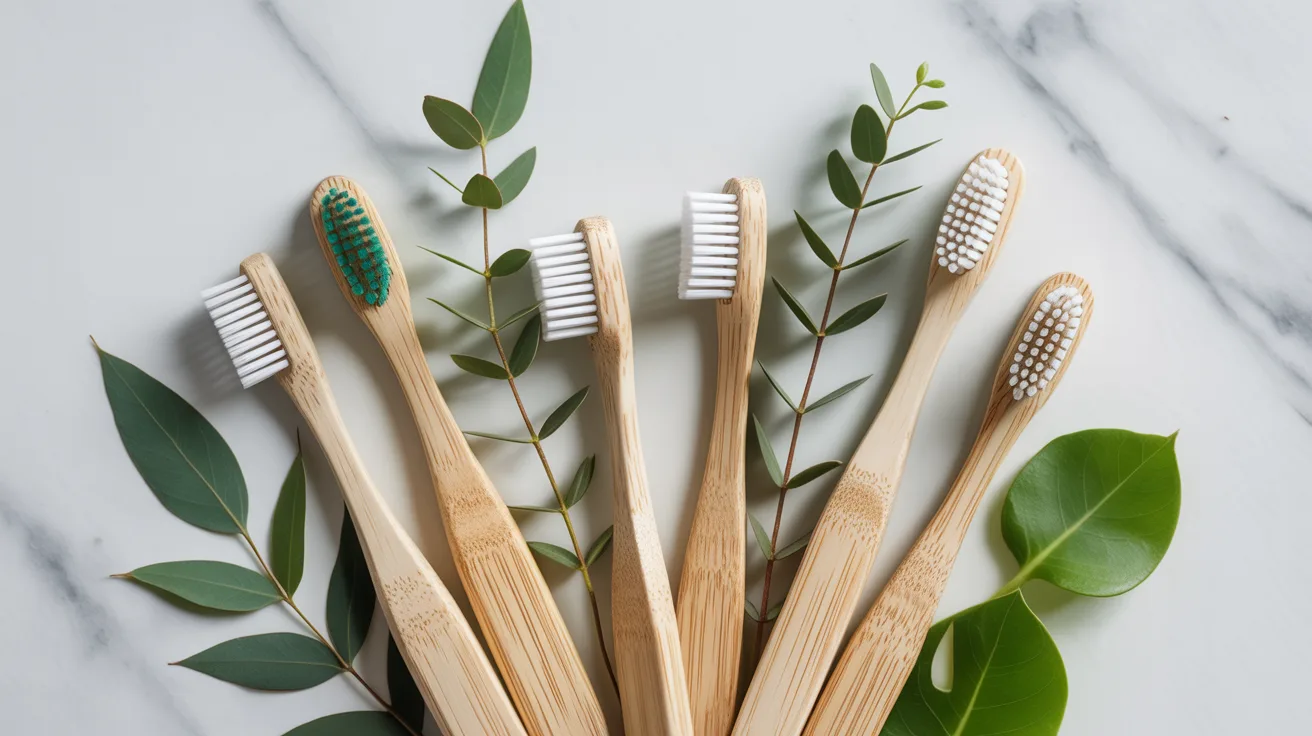
The NUDUKO earns our top spot for solving the most universal bamboo toothbrush complaint: "whose brush is whose?" Each of the 10 handles is individually numbered (1-10), eliminating the guesswork that plagues every household making the switch from color-coded plastic brushes. It's a small design choice that makes a massive difference in daily usability.
The BPA-free soft bristles provide the gentle, effective clean that dentists recommend — firm enough to displace plaque from the gum line, soft enough to avoid enamel abrasion. The bristles are tapered at the tips for better access to interproximal spaces (between teeth), matching the performance of mid-range plastic toothbrushes.
The handle ergonomics are where NUDUKO truly excels. The slight curve fits naturally in the hand, the matte finish prevents slipping when wet, and the handle length accommodates both adult and teen grips. Packaging is fully biodegradable — no plastic windows, no shrink wrap, no petroleum-based inks.
With 10 brushes per pack, you're looking at over two years of plastic-free brushing for a single person (replacing every 3 months as recommended), or 7-8 months for a family of four. The per-brush cost is exceptionally competitive.
✅ Pros
- Individually numbered handles — essential for families
- BPA-free soft bristles with tapered tips
- Excellent handle ergonomics and wet grip
- Fully biodegradable packaging
- 10-pack offers outstanding value per brush
- Strong long-term customer satisfaction
❌ Cons
- Bristles are nylon-based (not fully compostable)
- Numbers may fade with prolonged water exposure
- No travel case included
- Handle can darken over time (natural bamboo oxidation)
Our verdict: The NUDUKO delivers the best combination of practical design, bristle quality, and value. The numbered handles solve a real problem that other bamboo toothbrushes ignore entirely. If you want one recommendation — this is it.
2. Virgin Forest Bamboo Toothbrush 10-Pack — Best for Whitening (Elyvora US Score: 9.2/10)
💰 Budget-Friendly
The Virgin Forest differentiates itself with charcoal-infused bristles — activated bamboo charcoal integrated into the nylon fibers. Charcoal's porous structure helps absorb surface stains from coffee, tea, and wine, providing a mild whitening effect without chemical bleaching agents or harsh abrasives.
The premium Moso bamboo handles are noticeably denser and more polished than budget alternatives. Moso (Phyllostachys edulis) is the strongest and most durable bamboo species commercially available — it's what's used in bamboo flooring and structural applications. For a toothbrush handle, this translates to better moisture resistance and longer lifespan before showing wear.
Each brush features a sleek, slightly wider head that covers more tooth surface per stroke. The charcoal bristles are medium-soft — slightly firmer than the NUDUKO's soft bristles — which some users prefer for a more thorough "scrubbed clean" sensation. The dark bristle color also has a practical advantage: it doesn't show discoloration from toothpaste residue the way white bristles do.
If you're someone who drinks coffee or tea daily and wants mild whitening support without the chemical sensitivity issues that come with peroxide-based products, Virgin Forest offers a compelling natural alternative.
✅ Pros
- Charcoal-infused bristles for natural stain removal
- Premium Moso bamboo — denser, more moisture-resistant
- Dark bristles hide toothpaste discoloration
- Wider brush head for more coverage per stroke
- No chemical whitening agents
❌ Cons
- Medium-soft bristles may feel too firm for sensitive gums
- Charcoal whitening effect is subtle, not dramatic
- No handle identification system for multi-person use
- Slightly higher per-brush cost than competitors
Our verdict: The Virgin Forest is the best choice for coffee and tea drinkers who want natural stain management. The premium Moso bamboo construction gives these brushes a noticeably more refined feel — you can sense the material quality difference immediately. The charcoal bristles won't replace professional whitening, but they provide gentle daily maintenance without sensitivity.
3. VIVAGO Biodegradable Bamboo Toothbrush 10-Pack — Best for Families (Elyvora US Score: 9.0/10)
💰 Budget-Friendly
The VIVAGO takes the family-friendly approach with its color-coded bristle system. Each brush in the 10-pack features a different bristle color — making identification instant even for young children who can't read numbers. "Grab the blue one" is easier than "grab number 7" when you're managing a household of mixed ages.
The compostable design extends beyond the handle. VIVAGO has put thought into every component — the packaging is plastic-free cardboard, the adhesives are plant-based, and the bristles, while still nylon (a current industry limitation), are BPA-free. When the brush reaches end-of-life, snap off the head, compost the handle, and dispose of the bristle head with minimal guilt.
Bristle softness is comparable to the NUDUKO — soft enough for children's developing enamel while firm enough for effective adult cleaning. The handle design is slightly thinner than competitors, which can be either a pro (easier for small hands) or a con (less substantial feel for large-handed adults).
For eco-conscious families trying to get children excited about sustainability, VIVAGO provides the visual engagement that plain natural bamboo doesn't. The colors make the transition from plastic toothbrushes feel less like a sacrifice and more like a fun upgrade.
✅ Pros
- Color-coded bristles — instant family identification
- Compostable handle design with plant-based adhesives
- Appropriate bristle softness for both children and adults
- Plastic-free packaging throughout
- Engaging colors help children transition from plastic
❌ Cons
- Thinner handle may feel insubstantial for adults
- Color-coded bristle dyes add minimal processing chemicals
- Bristles still nylon — not fully compostable
- Fewer unique colors than brushes in the pack
Our verdict: The VIVAGO is purpose-built for families making the switch to plastic-free oral care. The color system eliminates confusion, the softness works for all ages, and the compostable design teaches children that everyday choices have environmental consequences. It's the easiest transition product on this list.
4. Daletu Eco-Friendly Bamboo Toothbrush 10-Pack — Best Budget Entry (Elyvora US Score: 8.8/10)
💰 Budget-Friendly
The Daletu strips everything to essentials and delivers a straightforward bamboo toothbrush at the most competitive price point in our comparison. No charcoal infusion, no color coding, no numbering system — just a well-made bamboo handle with ultra-soft bristles and zero-waste packaging.
The ultra-soft bristles are the softest in our comparison — genuinely gentle against gum tissue, making Daletu the best choice for people with receding gums, post-dental surgery sensitivity, or anyone who's been told by their dentist to "brush softer." The bristle density is good, providing adequate plaque removal despite the extra softness.
Daletu's zero-waste packaging commitment is the most rigorous in our lineup. Every component — outer box, inner wrapping, printing inks — is designed for composting or recycling. No hidden plastic films, no moisture-barrier coatings, no synthetic adhesives. What you see is what goes into your compost bin.
The minimalist design aesthetic appeals to users who prefer their sustainability choices to be understated rather than broadcast. The natural bamboo color and grain remain fully visible — no varnishes, no laser engravings, no branding beyond subtle printing.
✅ Pros
- Most competitive price per brush in comparison
- Ultra-soft bristles — ideal for sensitive gums
- Most rigorous zero-waste packaging
- Minimalist, unbranded natural aesthetic
- No dyes, varnishes, or coatings on handle
❌ Cons
- No identification system for multi-person households
- Ultra-soft bristles may feel insufficient for heavy plaque
- Plain design lacks visual engagement for children
- Handle finish is rougher than premium competitors
Our verdict: The Daletu is the entry-level gateway to plastic-free brushing — and it executes the basics flawlessly. If you want the cheapest possible bamboo toothbrush with ultra-soft bristles and genuinely zero-waste packaging, this is your pick. The science doesn't care about the price tag — bamboo eliminates microplastic exposure regardless of which brand you choose.
Building Your Complete Plastic-Free Oral Care Routine
Switching to a bamboo toothbrush is the single highest-impact change in your oral care routine — but it's not the only one. Here's how to extend the plastic elimination across your entire dental hygiene regimen:
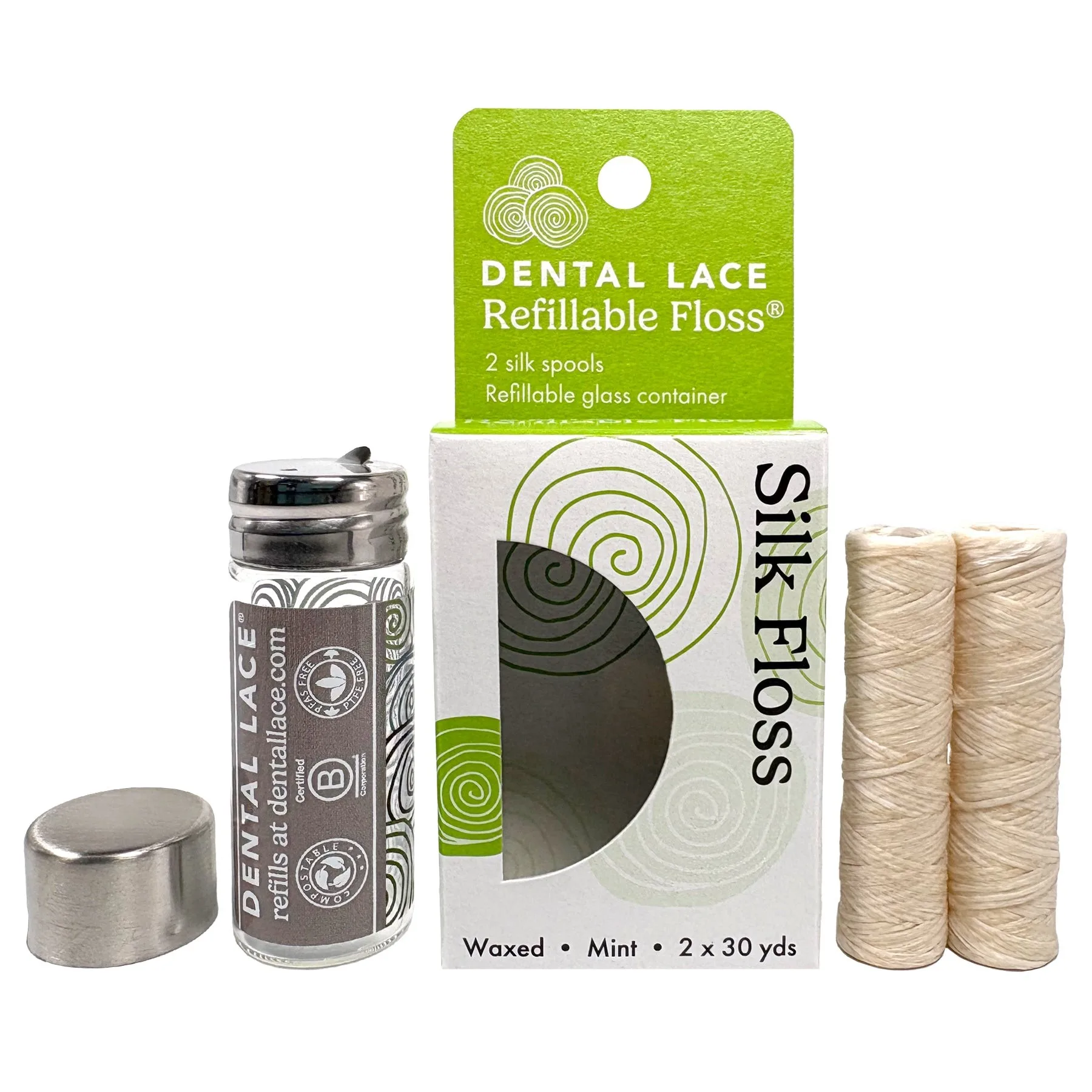
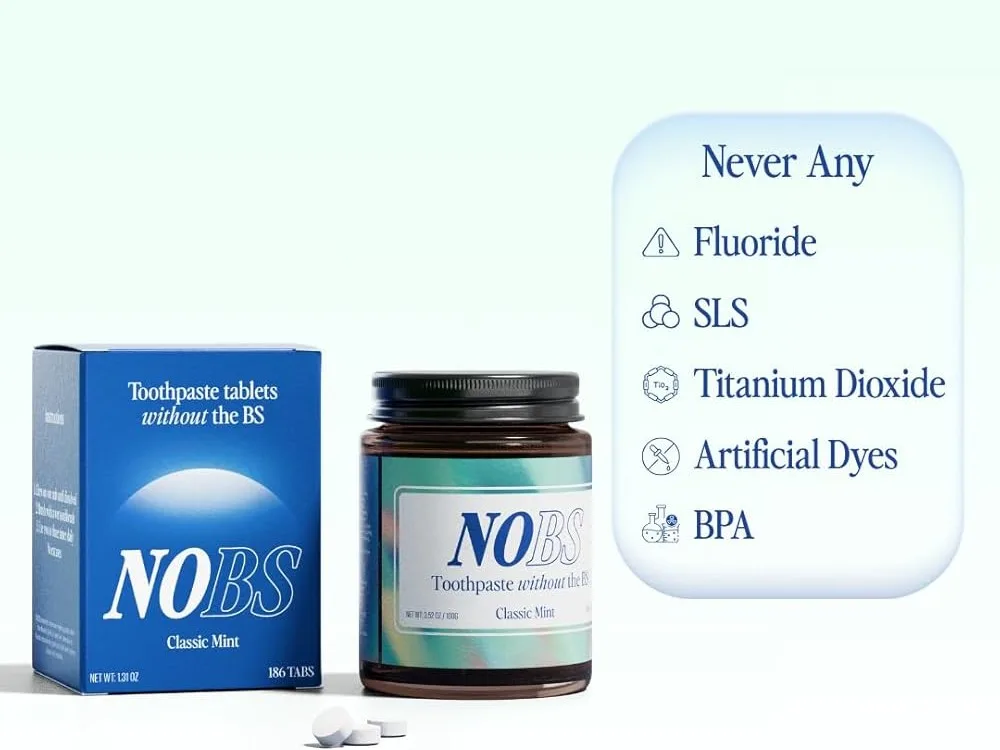
Toothpaste: Conventional tubes are non-recyclable multi-layer plastic. Switch to natural toothpaste options or consider toothpaste tablets that ship in glass jars or compostable pouches — zero plastic waste per tube.
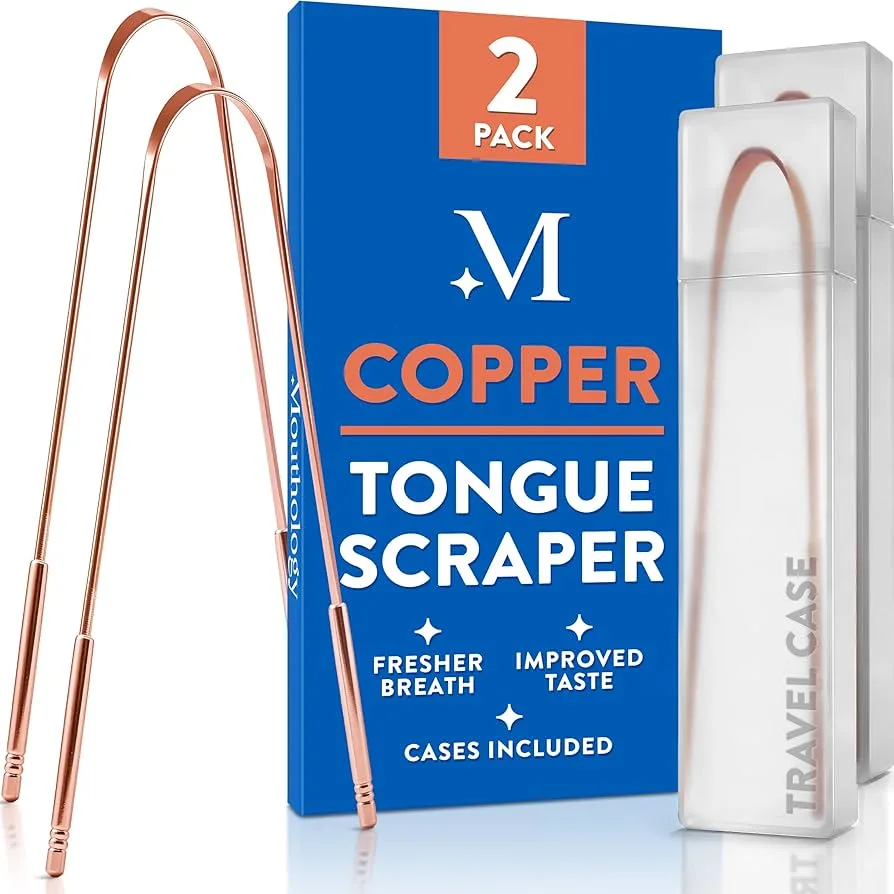
Tongue cleaning: A copper tongue scraper replaces plastic scrapers permanently. Copper's antimicrobial properties (documented in peer-reviewed research) mean it self-sanitizes between uses — one purchase lasts years.
Brushing technique: How you rinse matters more than most people realize. Our guide on whether you should rinse after brushing breaks down what the science actually says — and the answer isn't what toothpaste brands want you to hear.
The bigger picture: If you're wondering why your dental health isn't where it should be despite consistent brushing, your oral care products may be the problem, not the solution. The microplastic exposure from plastic toothbrushes is just one piece of a larger puzzle.
Final Verdict: The Science Supports the Switch — Your Lifestyle Picks the Winner
The peer-reviewed evidence is clear: plastic toothbrushes release microplastic particles directly into your mouth during brushing, those particles adhere to oral tissues and enter your bloodstream, and microplastics have been detected in 80% of human blood samples. Life cycle assessments confirm bamboo toothbrushes deliver 97% less plastic waste over their lifetime. All four bamboo toothbrushes in our comparison eliminate the plastic handle entirely.
The NUDUKO (9.4/10) wins for most people — the numbered handles solve the universal family identification problem, and the BPA-free soft bristles provide the best all-around clean.
The Virgin Forest (9.2/10) wins for coffee and tea drinkers who want natural stain management through charcoal-infused bristles with premium Moso bamboo construction.
The VIVAGO (9.0/10) wins for families with children who need color-coded identification and want the easiest possible transition from plastic.
The Daletu (8.8/10) wins for budget-conscious buyers and sensitive gum sufferers — because the science works the same at every price point.
The bottom line: the best bamboo toothbrush is the one you'll actually switch to. Whether you choose the top-rated NUDUKO or the value-driven Daletu, every bamboo toothbrush in this guide eliminates the microplastic exposure documented by Leslie et al. and the life cycle impact measured by Ashley et al. Pick the one that fits your household — and stop feeding plastic to your gums twice a day.
❓ Frequently Asked Questions
Are bamboo toothbrush bristles compostable?
Not yet — this is an industry-wide limitation. Currently, all bamboo toothbrushes use nylon or nylon-derivative bristles because truly compostable alternatives haven't matched nylon's cleaning performance and safety profile. The bamboo handle (which represents the majority of the brush's mass) is fully compostable. At end-of-life, snap off the bristle head, compost the handle, and dispose of the small nylon head separately. Researchers are developing plant-based bristle alternatives, but none have reached commercial viability as of 2026.
Do bamboo toothbrushes get moldy?
They can if stored improperly — but it's easily preventable. After brushing, shake off excess water and store upright in a well-ventilated holder. Avoid enclosed cup holders where moisture pools at the base. Bamboo's natural lignin content (which contains antimicrobial phenolic compounds per PMC9137583) provides some resistance to microbial growth, but it's not a substitute for proper drying between uses. If you see discoloration at the base, it's time to replace.
How often should I replace my bamboo toothbrush?
Every 3 months — same as plastic toothbrushes. This recommendation comes from the ADA and applies regardless of handle material. The bristles (not the handle) are what wear out — splayed bristles clean up to 40% less effectively than fresh ones. With a 10-pack, you're set for over 2 years of replacements. Some users find bamboo handles develop character (natural patina) rather than looking worn — unlike plastic handles that just look old.
Do bamboo toothbrushes clean as well as plastic ones?
Yes — cleaning effectiveness comes from bristles and technique, not handle material. The handle is simply the grip — it has no impact on plaque removal. Since bamboo toothbrushes use the same nylon bristle technology as conventional brushes, cleaning performance is equivalent. The 2020 LCA study (PMID 32918023) compared bamboo and plastic toothbrushes across multiple functional categories and found no meaningful difference in oral hygiene effectiveness.
Is bamboo toothbrush production actually sustainable?
The LCA data says yes — but with nuances. The 2020 life cycle assessment (PMID 32918023) found bamboo toothbrushes use 97% less plastic than conventional brushes and have 11× lower climate impact than electric toothbrushes. Bamboo grows rapidly without pesticides, regenerates from its root system (no replanting needed), and biodegrades at end-of-life. The main sustainability caveat is transport — most bamboo is grown in Asia and shipped globally. Buying in bulk (10-packs) reduces per-unit transport impact significantly.
📚 Scientific References
All claims in this article are supported by peer-reviewed research. Click any citation to verify at the source.
- Leslie HA, et al. "Discovery and quantification of plastic particle pollution in human blood." Environment International. 2022;163:107199. PMID: 35367073
- Ashley PJ, et al. "Toothbrush type and its impact on the environment." British Dental Journal. 2020. PMID: 32918023
- Mateescu AL, et al. "Micro- and Nanoplastics from Dental Materials and Oral-Care Products." International Journal of Environmental Research and Public Health. 2025. PMC: PMC12471792
- Koga S, et al. "Antibacterial Properties of Lignin from Japanese Bamboo." Polymers. 2022;14(12):2378. PMC: PMC9137583
- Hariharan A, et al. "Novel Non-woven Fabric from Bamboo Fiber for Medical Lifestyle Products." Polymers. 2023;16(9):1291. PMC: PMC11066308