Overview
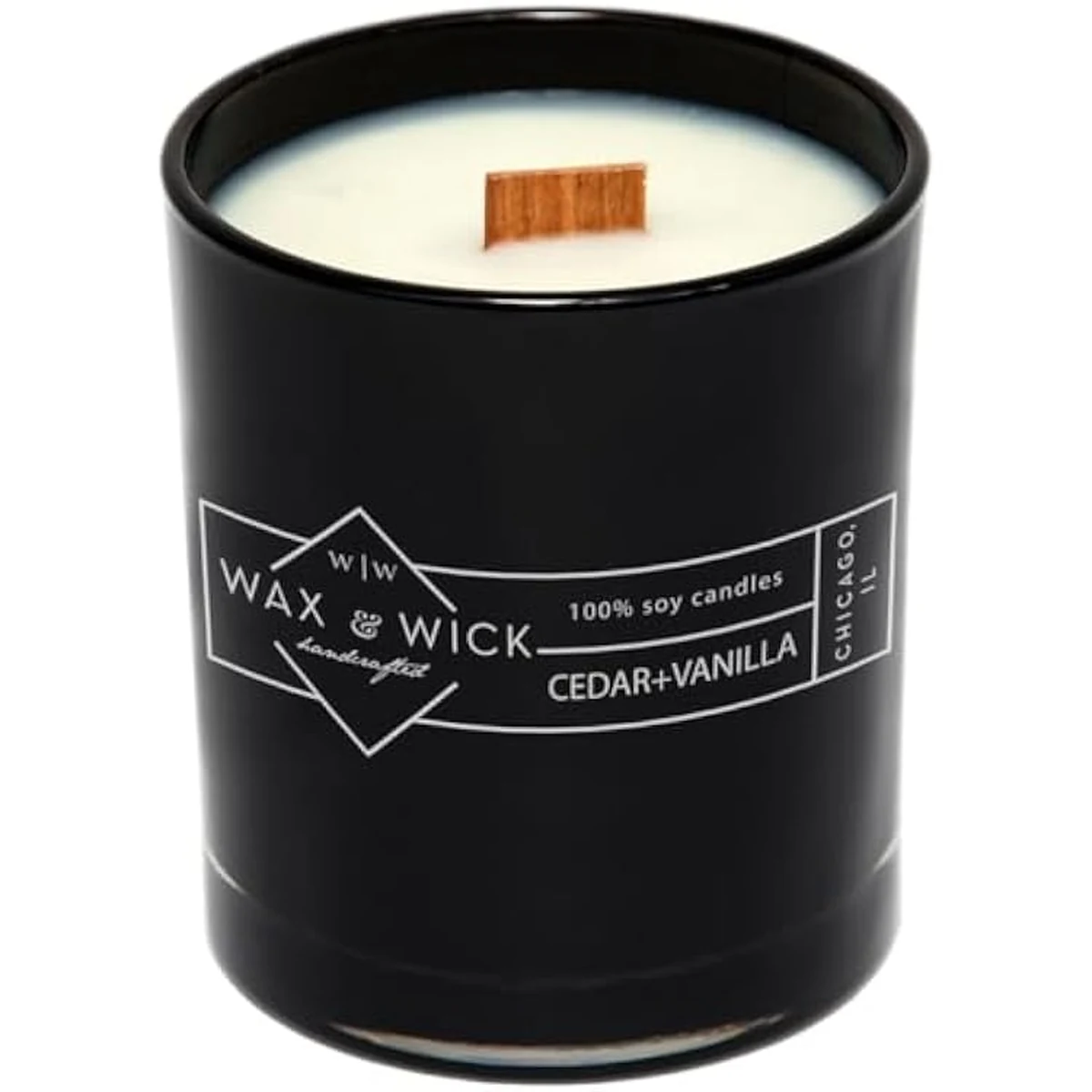
The scent is built around dry cedarwood and softened vanilla, with amber and sandalwood character underneath. It is warmer than the reed diffuser and less floral than the Vitruvi blend, making it the most dinner-adjacent option in the collection. The documented construction uses 100% undyed soy wax with a double wood wick. It is paraffin-free, phthalate-free, paraben-free, hand-poured in the United States, and presented in a reusable glass vessel. Those choices improve material transparency, but soy wax and natural positioning do not make any burning candle emission-free.
For a cleaner burn, follow the maker's wick-trimming instructions, keep the vessel on a stable heat-resistant surface, and avoid drafts that make the flame flicker or smoke. Never leave it unattended, move it while the wax is liquid, or place it near curtains, children, or pets. Ventilate during and after use. If the wick mushrooms, the flame grows unusually high, or visible soot appears, extinguish it safely and let the vessel cool. For a flame-free alternative, the Marycele top-down warmer in the Elyvora US natural home fragrance device guide melts the wax without lighting the wick and offers timer and intensity control.
The fragrance story has both psychological and air-quality evidence. Ikei and colleagues reported that Japanese cedarwood volatiles were associated with transient changes in sympathetic activity and mood after monotonous work. The species and chemical profile are not identical to this candle's cedar accord, so this is wood-aroma category evidence only. Matsunaga and colleagues found that positive odor-evoked autobiographical memories improved mood and produced measurable physiological changes. Vanilla and cedar can be strongly associative, but the effect depends on the individual's learned memories. For balance, Petry and colleagues evaluated selected candle emissions and concluded that normal use of the tested scented candles did not present known health risks for the compounds evaluated. That conclusion is not the same as zero emissions, and it does not test this exact candle.
This is the right pick when you want a warm, wood-led hosting ritual and can supervise it properly. It is the wrong pick for bedrooms during sleep, homes where open flame is unacceptable, or scent-sensitive households that react to heated fragrance. Correct odor sources before adding scent, ventilate, and stop use if irritation occurs. The candle loses points for combustion and supervision but earns its place through a restrained profile, transparent wax claims, and rare compatibility with both traditional burning and flame-free warming.
Key Features
Award: Best Warm Hosting Ambiance for evening living rooms
Dry cedarwood and restrained vanilla with amber and sandalwood character
100% undyed soy wax and paraffin-free construction
Double wood wick for visible flame and gentle crackle
Phthalate-free and paraben-free formulation claims
Hand-poured in the United States
Reusable glass vessel
Compatible with top-down candle-warmer lamps for flame-free use
Best For
This product is highly recommended for:
- Evening hosts who want fragrance, glow, and ritual together
- People who prefer woody vanilla over sugary or overtly floral candles
- Buyers prioritizing soy wax and paraffin-free construction
- Candle owners willing to follow active flame and ventilation precautions
- Users who want the option of top-down flame-free warming
Pros
- Cedar keeps vanilla warm and restrained rather than dessert-like
- Double wood wick adds atmosphere beyond scent alone
- 100% undyed soy wax with no paraffin
- Phthalate-free and paraben-free formulation claims
- Reusable glass vessel and United States hand-pouring
- Works under a candle-warmer lamp when open flame is undesirable
- Balanced research discussion includes both memory effects and emissions context
Cons
- Burning requires continuous supervision and fire-safe placement
- Natural soy wax still produces combustion emissions when the wick is lit
- Wood wicks need correct trimming to avoid unstable flames or soot
- Heated fragrance may not suit asthma, migraine, or scent-sensitive households
- Less practical than passive formats for unattended background fragrance
Frequently Asked Questions
Is a soy candle emission-free?
No. Soy wax removes paraffin from the formulation, but lighting any wick creates combustion products. Burn only as directed, trim the wick, avoid drafts, ventilate, and use a top-down candle warmer when you want fragrance without combustion.
What does cedar and vanilla smell like together?
Cedar contributes dry, pencil-shaving-like woodiness while vanilla rounds the edges with soft warmth. Amber and sandalwood character deepen the base. The overall result is cozy and structured rather than sugary or bakery-like.
Can I use this candle with a warmer lamp?
A top-down candle-warmer lamp is the most logical flame-free pairing for a jar candle. Confirm the vessel dimensions fit the warmer, remove packaging, and follow both manufacturers instructions. Warming releases fragrance without lighting the wood wick.
Does cedarwood research apply to this candle?
Only at the category level. The cited human study used Japanese cedarwood volatiles, while a candle fragrance accord may use a different chemical profile. The study helps explain why woody aromas are interesting, but it does not prove a physiological effect from this finished product.
How do I reduce soot from a wood wick candle?
Follow the label's trimming guidance, keep the candle away from drafts, maintain a stable flame, and stop if the wick mushrooms or the vessel shows visible soot. Never exceed the recommended burn time. A warmer lamp eliminates wick combustion entirely.